3 min read

Chlor-Alkali in 2026: Why Market Insight Matters More Than Ever

Chlor-Alkali in 2026: Why Market Insight Matters More Than Ever


The chlor-alkali market entered 2026 with a more complex set of pressures than in previous years. New capacity additions, shifting trade flows, geopolitical disruption, and changing downstream demand are reshaping the outlook across Asia, Europe, and the United States.

In Asia, the caustic soda market is gradually moving from a tight balance toward a more comfortable supply position. Several new downstream projects are scheduled to come online in China, Southeast Asia, and India during 2026. At the same time, the region has seen concentrated additions of caustic soda capacity over the past two years. This is creating a more supply-led market environment at a time when demand recovery across some sectors remains uneven.

Geopolitical developments are adding another layer of uncertainty. The US-Iran conflict has pushed Asian ethylene prices higher, sharply increasing production costs for chlor-alkali producers across Northeast and Southeast Asia. The conflict has also disrupted commodity flows, restricting supplies of key raw materials such as sulphur and sulphuric acid.

These materials are essential for major caustic soda-consuming sectors in Southeast Asia, including nickel-cobalt hydroxide production and the paper industry. As a result, chlor-alkali producers in Asia are facing pressure from both rising costs and weaker-than-expected downstream demand. Profitability is becoming an increasingly important factor in determining plant operating rates, which will in turn influence regional supply, demand, and pricing trends for caustic soda.

Europe and the United States have been relatively stable in 2026, but important shifts are taking place in downstream demand. Alumina remains one of the key sectors to watch. Reduced exports to the Middle East, where alumina is used in aluminum production, have increased availability in other regions and lengthened the market. This has pushed alumina prices lower—in some cases below production costs—creating pressure for non-integrated producers. For caustic soda markets, weaker alumina demand is a negative consumption factor.

The pulp and paper sector has also remained under pressure, particularly because of elevated production costs, including energy. Both alumina and pulp and paper are energy-intensive industries, and sustained cost pressure in these sectors continues to weigh on caustic soda demand.

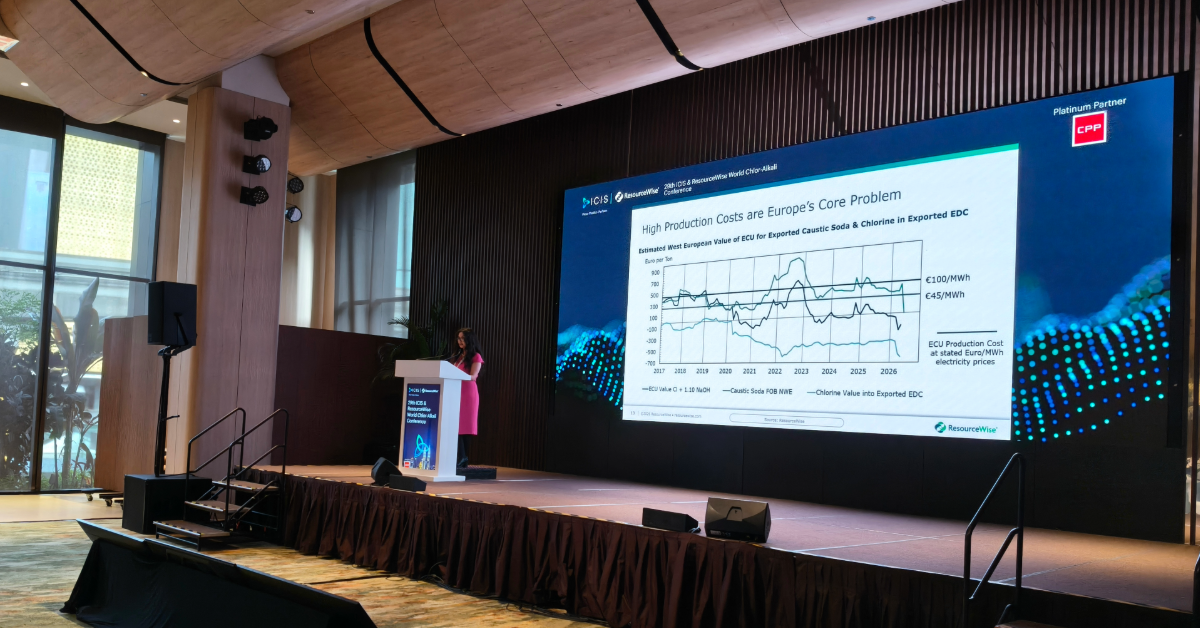
In Europe, chlor-alkali and vinyl producers continue to face structural challenges following a wave of site closures in 2025. High production costs are still affecting competitiveness, leaving the market relatively balanced but fragile.

PVC is another area where regional dynamics are shifting. European producers have faced squeezed—or in some cases negative—margins for many months, raising the risk of additional site closures similar to those seen in caustic soda. Pressure has intensified because of a steady flow of Asian PVC imports into Europe throughout 2025 and into 2026.

That trend may now be changing. Ethylene supply constraints in Asia, combined with higher freight costs, are making it more difficult for European buyers to rely on Asian imports. Longer lead times and reduced import flexibility are increasing dependence on regional supply. In the short term, this has contributed to tighter supply conditions and firmer prices.

These developments also matter for caustic soda markets. PVC production is a major outlet for chlorine, and disruptions to PVC operating rates can affect chlorine offtake and caustic soda output. In a market where operating rates are becoming increasingly important, the relationship between vinyls and caustic soda remains critical.

Looking further ahead, geopolitical uncertainty could drive a more structural shift in buyer behavior. Security of supply may become more important than securing the lowest available price, leading some European buyers to place greater value on regional sourcing.

Despite these challenges, Asia retains several important strengths. China’s large production base, together with the established petrochemical industries of China, Japan, and South Korea, gives the region a degree of resilience. Prices for many chemical products in Asia, including ethylene and caustic soda, have risen but remain relatively moderate compared with the scale of disruption. Following the recovery in regional production, Asian caustic soda prices also declined rapidly.

For chlor-alkali market participants, 2026 is likely to be defined by increasingly important regional differences. Asia is moving toward easier caustic soda supply conditions, although production costs and raw material disruptions remain significant risks. Europe and the United States are steadier, but downstream demand pressure and structural competitiveness challenges continue to shape the market outlook.

Understanding these developments will be essential for companies exposed to chlor-alkali, vinyls, and key downstream markets. The World Chlor-alkali Conference will provide an opportunity to examine these changes in greater detail, hear from market participants, and discuss how companies are responding to a more uncertain trading environment.


PET and Raw Materials: 2025 Review and 2026 Outlook

PET and Raw Materials: 2025 Review and 2026 Outlook

The global polyester value chain entered 2025 under mounting pressure, shaped by chronic overcapacity, unsustainably low profitability, and...
Read More
Glycols and Glycol Derivatives: 2026 Market Outlook

1 min read

Glycols and Glycol Derivatives: 2026 Market Outlook

Macroeconomic and Industry Environment: Slow Growth and Structural Length Global macroeconomic indicators suggest a subdued yet moderately improving...

Read More
2025 Supply and Demand Review: Overcapacity Forces Polyester Chain Rationalization in All Regions

2025 Supply and Demand Review: Overcapacity Forces Polyester Chain Rationalization in All Regions

Global overcapacity has long shaped the polyester value chain. In recent years, capacity expansions—led primarily by China but not limited to it—have...

Read More