
How Is China’s Pulp and Paper Capacity Growth Affecting Global Markets?
 Marko Summanen: Sep 24, 2026, 1:55:19 PM

DHL Express is moving fast on sustainable aviation fuel, and its latest deal shows why cargo could become an important demand channel for SAF development.
The company has signed a ten-year offtake agreement with SAF One for 250,000 tons of SAF from a planned Bahrain facility beginning in 2028. The deal gives DHL 25,000 tons per year and marks its first SAF offtake agreement in the Middle East. The fuel will be allocated globally through a book-and-claim model that allows customers to claim emissions reductions regardless of where their shipments move.
This is not an isolated move. In just a few months, DHL has signed four major SAF agreements across four geographies:
More than 240,000 tons from Phillips 66 in the U.S.
50 million liters from Neste for European flights in 2026
Around 240 million liters through a five-year partnership with IAG Cargo at Heathrow
250,000 tons from SAF One in Bahrain
The pattern matters. DHL is not just buying SAF; it is testing what a global SAF demand platform can look like when cargo customers are brought directly into the equation.
SAF demand does not have to depend solely on passenger airlines absorbing higher fuel costs or travelers voluntarily paying more at checkout. Cargo creates another route to market: large corporate shippers with Scope 3 targets, sustainability budgets, customer pressure, and, in some cases, regulatory reporting obligations.
DHL’s GoGreen Plus product sits directly in that space. It allows customers to reduce Scope 3 emissions using SAF. This turns the fuel into a premium logistics option rather than a general cost spread across the passenger market.
For example, a pharmaceutical company, electronics manufacturer, or consumer goods producer can decide how much of a green premium it is willing to support. They can use that intel to link spending to their own emissions strategy.
Book and claim is central to making this work. Book and claim is a system that separates the environmental benefits of sustainable fuel from its physical delivery. Companies can pay for SAF and claim the associated emissions reductions even if the fuel is used elsewhere in the aviation network.
Because SAF may be physically uplifted at specific airports, while DHL’s customers ship across global networks, the model separates the environmental attribute from the physical fuel molecule. That gives corporate buyers more flexibility. They can support SAF deployment where supply is available and still claim the associated emissions reductions against their own logistics footprint.
The SAF industry has long faced a chicken-and-egg problem: producers need committed buyers before they build, while buyers want a reliable supply before they commit. DHL may be showing one way through it.
By aggregating corporate demand, signing long-term supply deals, and packaging SAF as a Scope 3 solution, DHL is helping demonstrate how cargo can support SAF market formation alongside passenger aviation.
For SAF producers, that distinction matters. The next phase of market growth may not come from a single demand source, but from multiple channels that can translate decarbonization pressure into real fuel commitments.
DHL’s latest agreements show how quickly SAF demand signals are developing across regions, customers, and supply models.
ResourceWise’s monthly Sustainable Aviation Fuel Snapshot helps readers track what is moving the market next, with concise intelligence on SAF policy, mandate developments, pricing trends, feedstock signals, trade flows, production updates, and project activity.
The report also includes Prima CarbonZero data to give readers a clearer view of the forces shaping SAF supply, demand, and investment strategy.
For companies trying to understand where SAF is gaining momentum and what that means for future fuel procurement, compliance, and market positioning, the SAF Snapshot offers a data-backed monthly view.

 Marko Summanen: Sep 24, 2026, 1:55:19 PM

 ResourceWise: Sep 24, 2026, 8:45:24 AM
 ResourceWise: Sep 23, 2026, 8:57:48 AM
ResourceWise : Apr 21, 2025, 1:19:32 PM
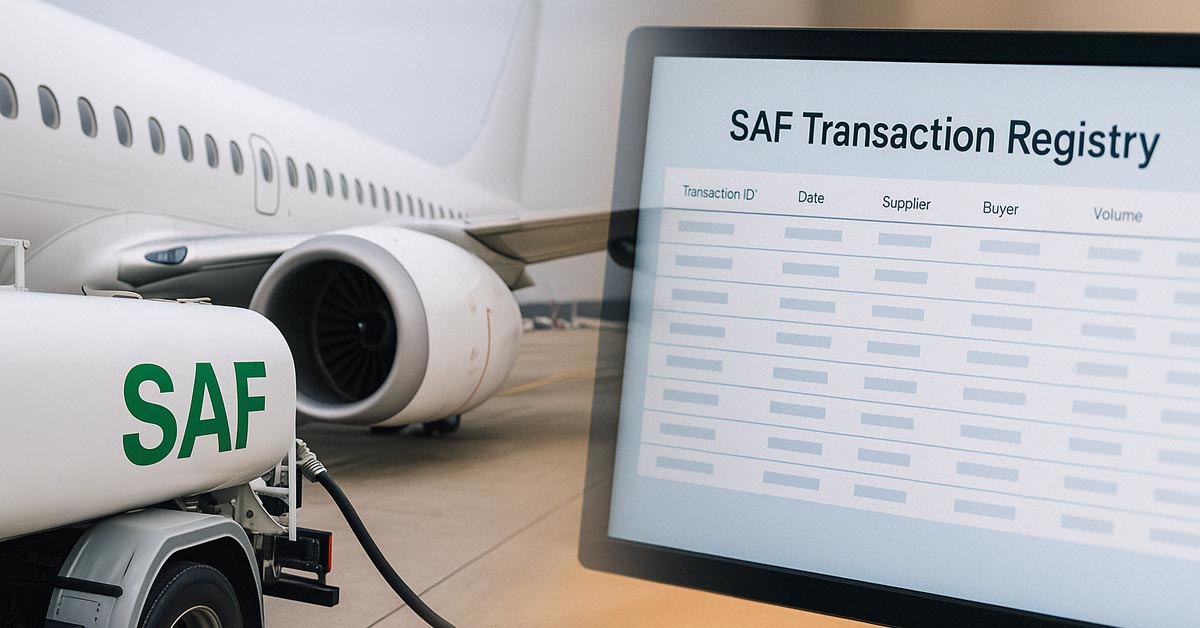
The International Air Transport Association (IATA) just took a major step toward making sustainable aviation fuel (SAF) more transparent, traceable,...
ResourceWise : Jun 8, 2026, 2:15:10 PM
The global sustainable aviation fuel market is still in its early stages. Yet one trend is becoming increasingly clear: Europe is pulling SAF into...

ResourceWise : May 31, 2025, 9:00:00 AM
As the world rapidly shifts focus toward renewables, sustainable aviation fuel (SAF) has become a pivotal piece of the puzzle within the airline...