
New IRS 45Z Guidance Tightens Link Between Feedstocks and Biofuel Economics
 ResourceWise: Oct 12, 2026, 2:25:00 PM
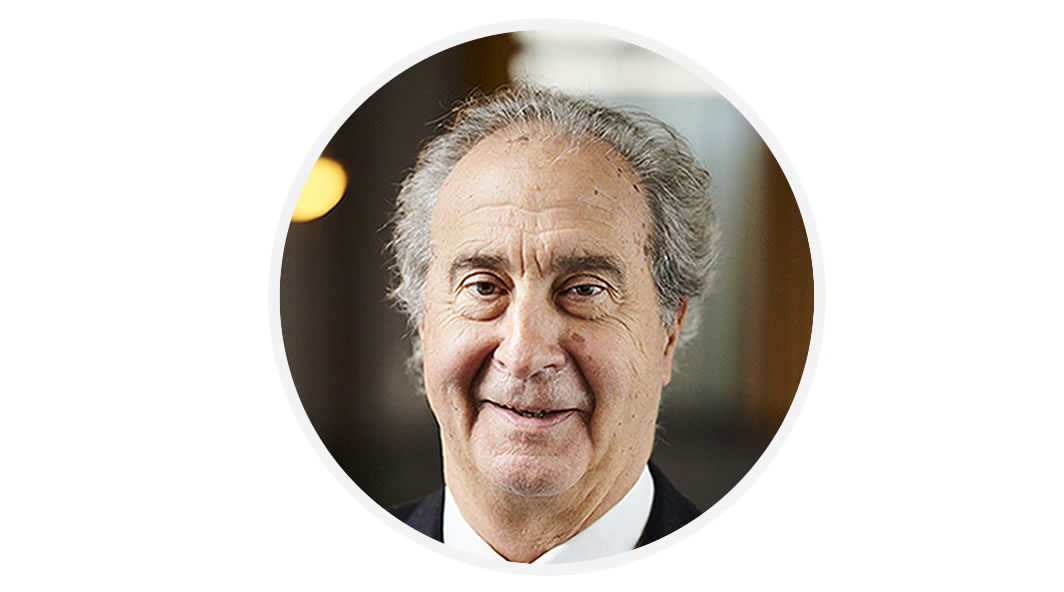
Antonello Ciotti, President, PETCORE EUROPE
Question: In 2024 and 2025, we have seen an accelerated rationalization across the entire PET value chain in Europe, resulting in reduced capacity in raw materials, PET production, and recycling. Is a structurally weakened European PET industry—from upstream to downstream—compatible with long-term circularity objectives?
Answer: Clearly, this solid reduction in manufacturing capacity, both rPET and vPET, is not compatible with the EU circularity targets.
As always, "the devil is in the details." EU manufacturers are exposed to an implementation of the Single Use Plastics Directive (SUPD) that has left too many uncertainties—so much so that instead of increasing collection and recycling inside the EU, it is pushing collection and recycling outside of the EU.
Q: Given that solutions implemented in one part of the value chain may negatively impact other segments, how can these trade-offs be effectively managed and mitigated?
A: We need to have a value chain approach. As PETCORE EUROPE represents the whole value chain, we are the logical forum to discuss what should be implemented for the benefit of the entire chain.
Q: Beyond specific measures, are there general or systemic actions that could help safeguard the entire PET industry in Europe?
A: As Ursula von der Leyen mentioned in the presentation of the Chemical Industrial Act, we need a holistic approach with concrete measures to help secure the global competitiveness of the EU chemicals industry.
Q: What concrete and ambitious actions should be prioritized for 2026 to reverse the current trend and restore both competitiveness and circularity in the European PET value chain?
A:
Securing energy supply, supporting decarbonisation, and enabling the shift toward a clean and circular economy
Creating lead markets and promoting innovation
Simplifying the regulatory framework
Q: As you prepare for the PETCORE EUROPE 2026 annual conference, what is top of mind for the industry?
A: The key concern is how to restore the competitiveness of PET manufacturing in the EU. Currently, we face challenges on several fronts, starting with the price of oil. European PET producers using virgin feedstock are being squeezed by non-EU manufacturers purchasing oil at almost half the price.
The war in Ukraine has compounded the problem, making the situation unsustainable.
Recyclers face similar pressures. Waste feedstock for recycling now costs almost ten times more in the EU than in third countries. In the past, European producers offset this gap with technological advantages, but many non-EU recyclers have now caught up.
Unless something changes, it will soon be impossible for European industry to regain competitiveness. We have already witnessed a contraction of more than one million tons per year in Europe’s PET recycling capacity, and plant closures are becoming frequent.
Q: This seems ironic as demand for recycled PET in Europe seems to be robust?
A: Demand should be robust due to mandated recycled-content requirements in EU regulation. Unfortunately, implementation has been unclear. Many EU countries apply no penalties when targets are not reached, and there is no consistent methodology for measuring recycled content.
As a result, demand is lower than expected and is being met largely by non-EU producers.
If we don’t safeguard European autonomy in essential sectors like PET, we risk losing independence and relying heavily on external partners. Recent global supply chain disruptions—such as those caused by tariff policies—show the dangers of losing the ability to meet internal needs. Without a clear level playing field, circularity and the future of Europe’s PET industry are at stake.
Q: So, what is the solution, and what do you need from EU policymakers?
A: The European Commission can draw inspiration from Prof. Mario Draghi’s report on competitiveness. PETCORE’s demands align fully with his recommendations, and we urge EU institutions to act swiftly and decisively.
We cannot expect global companies to keep producing and recycling in Europe when they could operate outside the EU at a fraction of the cost. Addressing this challenge is fundamental to the survival of the European PET industry.
PETCORE EUROPE is working with several EU departments to tackle these issues:
Stronger collection schemes for PET, to capture more material and reintroduce it into the system
A new TARIC code with DG TAXUD to track recycled material entering the EU and verify its authenticity and sourcing
Ensuring non-EU providers meet the two basic EU food-contact requirements:
Material must come from differentiated collection schemes (no waste picking)
At least 95% of containers must originate from food-contact applications
We are also working with EU institutions to address potential restrictions and misunderstandings—such as the proposed ban on PET trays for unprocessed fruits and vegetables by 2030. PET trays are fully recyclable, reusable, and part of a circular economy.
Q: What does PETCORE EUROPE's Annual Conference 2026 have in store?
A: The conference theme is restoring competitiveness in the European PET industry.
We have compelling speakers from across the value chain who will dig into the challenges they face and the actions they are taking. For 2026, we are expanding beyond Brussels and hosting the event in Rome to bring in local industry partners and on-the-ground insights.
EU-level developments will remain a major part of the agenda. Experts will outline what industry players can expect from future regulations. Representatives from DG GROW, DG TRADE, DG ENV, EFSA, OLAF, and others will be in attendance.
Q: Will the innovation sessions still take place?
A: Yes. This will be the third year we invite partners to submit papers on innovative projects. These sessions showcase developments across the value chain and offer a glimpse into the future of PET.
The conference is now a key event on the PET industry calendar. We ensure ample time for networking, discussions, and interactive sessions—always in person, never hybrid.
Q: What message do you hope participants take away from the conference?
A: The need for the industry to address both circularity and competitiveness.
This is also our message to regulators.
We need clear rules for implementing circularity in the EU, and we urgently need to address energy costs within the EU27 to bring them in line with costs outside Europe.
These two points are mission-critical for our sector and for the EU's ability to continue producing essential materials, such as PET, within its borders.
Learn more about the PETCORE EUROPE Conference 2026: https://www.petcore-europe.org/annual-conference-petcore-europe-conference/715-petcore-europe-conference-2026.html
 ResourceWise: Oct 12, 2026, 2:25:00 PM
 ResourceWise: Oct 9, 2026, 9:12:17 AM
 ResourceWise: Oct 7, 2026, 8:57:37 AM
![[Webinar Recap] European Plant Closures and Asian Overcapacity: Global Chemicals in Transition](https://www.resourcewise.com/hubfs/images-and-graphics/webinar-social-images/chemicals/ResourceWise%20Chemicals%20Q3%20Webinar%20From%20Closures%20to%20Overcapacity-4-CHEMICAL%20PRODUCTS%20SOCIAL%20SPEAKER%20HIGHLIGHT.png)
ResourceWise : Sep 29, 2025, 4:02:13 PM
As the global chemicals sector navigates mounting pressures, two themes are at the forefront: European plant closures and Asian overcapacity. Ahead...
 Hira Saeed : Jul 7, 2026, 3:55:18 PM
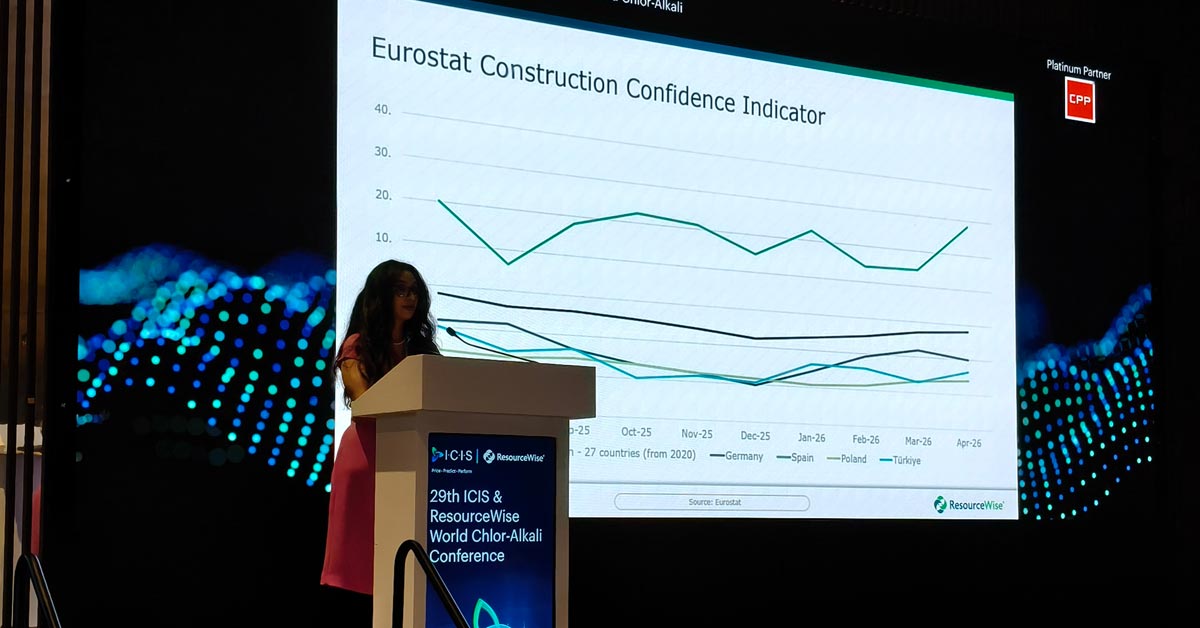
More insights from the recent World Chlor-Alkali Conference reveal an industry in flux. Europe's chlor-alkali and vinyls markets are facing a reset....
Hira Saeed : Jan 16, 2026, 4:00:00 AM
The global chlor-alkali and PVC sectors spent 2025 adjusting to a set of structural pressures that reshaped trade routes, altered operating...