

The ResourceWise U.S. Unbleached Corrugated Box Cost Index: A Cost-Based Alternative for Corrugated Contract Price Adjustments
 ResourceWise: Oct 2, 2026, 9:37:04 AM
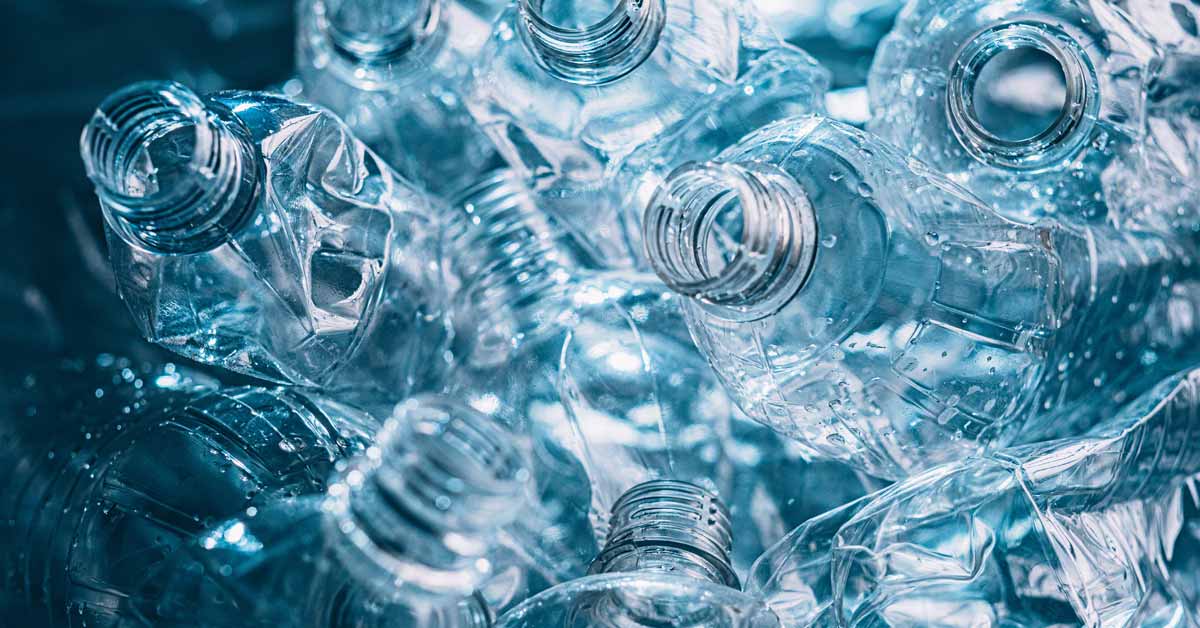
As the global energy transition accelerates, innovation is increasingly focused not just on replacing fossil fuels but on rethinking waste itself.
From crop residues to used cooking oil, renewable markets have long searched for ways to extract value from materials already circulating in the economy. But one of the most persistent and visible environmental challenges remains plastic waste. In particular, the challenges come in addressing single-use plastics that end up in landfills, incinerators, or the natural environment.
Globally, an estimated 91% of plastic waste falls outside traditional recycling systems. Mechanical recycling struggles with mixed, contaminated, or degraded plastics. As a result, enormous volumes of material with embedded energy and chemical value are simply lost.
Now, a new wave of chemical recycling technology is attempting to close that loop. One company, Refinity, a subsidiary of industrial growth conglomerate Innventure, has announced a technical validation milestone. The breakthrough could significantly alter how plastic waste fits into both the circular economy and the low-carbon fuel market.
At the center of this breakthrough are a proprietary reactor design, the DuoZone reactor, and the underlying process: plastic pyrolysis.
Refinity recently completed a validation trial that processed one metric ton of real-world plastic waste, not laboratory-grade, clean feedstock. They achieved conversion yields of 60% to 70% with minimal char byproduct.
This real-world distinction is vital for several reasons.
Chemical and plastic recycling technologies have often demonstrated promising results under controlled lab conditions. However, they typically face performance declines when confronted with heterogeneous, contaminated waste streams in real-world applications. Successfully processing mixed plastic waste at scale represents a critical technical pivot point.
With this milestone, Refinity is advancing toward:
The implications extend beyond proof of concept. By converting waste plastic back into chemical intermediates such as naphtha, Refinity’s technology enables plastics to re-enter existing petrochemical infrastructure. Doing so will effectively transform discarded products into feedstock for new, high-quality plastics.
For an industry under mounting pressure to reduce reliance on virgin fossil extraction, this presents a meaningful circular pathway.
Plastic pyrolysis is a thermochemical process that heats plastic waste in the absence of oxygen. Rather than burning the material, pyrolysis breaks long-chain polymers down into smaller hydrocarbon molecules.
The output typically includes:
What distinguishes Refinity’s approach is its DuoZone reactor design, which enables more controlled conversion and higher yields when processing mixed, real-world waste streams. Achieving 60–70% conversion yields from contaminated plastic feedstock shows substantially improved efficiency and commercial viability.
In simple terms:
Plastic → Broken down thermally → Converted into usable chemical intermediates → Fed back into petrochemical or fuel production systems
Rather than treating plastic waste as an environmental liability, pyrolysis treats it as a hydrocarbon resource. And that is where the renewable angle becomes particularly interesting.
Refinity’s breakthrough extends beyond circular plastics.
The company has also secured a license from a US national laboratory for catalyst technology that converts reactor gas products into Sustainable Aviation Fuel (SAF).
This positions plastic pyrolysis within a rapidly evolving regulatory framework, particularly in the UK and EU.
In the UK, policymakers have introduced the concept of Recycled Carbon Fuels (RCFs) — fuels produced from non-recyclable fossil-derived waste such as plastic. Under the UK SAF mandate, RCFs can count toward blending requirements.
Unlike traditional biofuels, RCF-based SAF:
With aviation and maritime sectors actively searching for scalable, non-biogenic feedstocks, plastic-to-fuel pathways occupy a valuable niche that remains chronically undersupplied. In other words, the technology could have significant implications for the supplies needed to produce these fuels.
If Refinity’s technology scales successfully, it could represent a structural addition to the low-carbon fuel mix.
Recycled carbon fuels provide an alternative to traditional bio-based feedstocks. As mandates expand and premium pricing emerges for SAF and advanced fuels, waste-derived hydrocarbons could offer an economically attractive pathway. This is especially noteworthy when RCF credits or fuel premiums are strong.
One of Refinity’s strategic advantages lies in its options.
A facility can operate as a swing producer:
This flexibility reduces exposure to single-market volatility.
Plastic pyrolysis does not displace bio-based SAF. Instead, it potentially complements it.
As aviation and maritime sectors seek scalable solutions, the future fuel mix may include:
Refinity’s validation suggests recycled carbon could become a meaningful pillar within that portfolio.
Plastic waste has long been considered an environmental failure. Technologies like plastic pyrolysis help to reframe it as a resource.
That does not eliminate the need to reduce single-use plastics or improve mechanical recycling. But it introduces a pathway for the fraction of waste that remains non-recyclable under current systems.
If scaled effectively, plastic pyrolysis could:
The key question now is commercial scale. Can high-yield performance on one metric ton translate into consistent industrial output at 10,000 tons per year? And could this technology realistically scale upwards to 150,000-ton facilities?
If so, recycled carbon may soon sit alongside bio-based fuels as a core component of the energy transition. In a world urgently seeking both circularity and decarbonization, that convergence could prove transformational.

 Jennifer Hawkins: Oct 2, 2026, 9:29:05 AM
 ResourceWise: Oct 1, 2026, 1:54:23 PM
Fisher International : Jul 18, 2022, 12:00:00 AM
Consumer awareness about excessive plastic pollution and its hazardous effects to the environment has intensified in recent years, and we are...

ResourceWise : Mar 18, 2021, 12:00:00 AM
Plasticizer supply in Europe has been gradually tightening since the start of the summer of 2020 but tightness has reached a new level in the past...

 Rachel Uctas : Dec 5, 2025, 5:16:53 PM
In 2025, the global plasticizer market has been squeezed by weak macroeconomic conditions, soft construction demand, and shifting trade barriers....