
Singapore Bio-Bunker Sales Are Down 70%. What's Happening?
 ResourceWise: Sep 8, 2026, 1:59:08 PM

Early this month, UPM and Sappi signed a non-binding letter of intent to create a 50/50 joint venture that would unite nearly all of their graphic paper operations. This strategic move signifies a major structural shift in Europe’s printing and writing paper sector, reflecting continued demand decline persistent overcapacity, and high energy costs across the region.
Both companies emphasized the same strategic objective: building long-term resilience and sustainability. The joint venture is expected to rationalize supply, stabilize the market, and help the European graphic paper sector withstand competitive pressures — particularly from increasing imports.
Understanding the potential impacts this move could have on the industry requires data-driven analysis of assets, costs, energy intensity, carbon performance, and market dynamics.
Major mergers, consolidations, and joint ventures like the proposed UPM-Sappi agreement involve complex questions:
Which assets are competitive? Where does overcapacity exist? How might supply rationalization affect pricing? Which mills or machine lines are most at risk – or best positioned for long-term viability?
Reliable market data enables stakeholders to move beyond assumptions and instead base decisions on measurable insights. High-quality industry data can provide:
When organizations use robust market data, they can more accurately predict how consolidation may alter the competitive landscape, where restructuring is most likely, and how quickly market conditions could stabilize. It helps decision-makers model scenarios with confidence, reduce uncertainty, and anticipate the ripple effects across the value chain.
This is where FisherSolve delivers value
When evaluating M&A impacts, FisherSolve allows users to create various scenarios to understand the different impacts that could occur. Users can select specific sites from one or more companies to form a new hypothetical entity. Once created, the module provides full access to projected data, capacities, assets, and benchmarking analysis for this newly formed company – as if the merger were already real.
In a market characterized by low demand and high cost pressure, such scenario modeling is vital. Asset quality and energy costs will play a central role in determining which mills remain viable. In the example shown below, FisherSolve compares paper-making lines based on energy cost and machine viability. Machine size, technical age, productivity, and necessary capital expenditures all influence the position of each data point, with every dot representing a single machine line.
These insights show why consolidation introduces significant risk for near-obsolete assets. A newly combined company can restructure its asset base by shutting down outdated and high-cost lines, improving overall competitiveness. However, in soft market conditions, this rationalization may temporarily depress market prices even further. For mills already struggling to invest in modernization, such a window can be challenging to survive.
The industry also faces an additional layer of competitiveness: carbon performance. Carbon emissions are becoming a second dimension of cost. Regardless of a mill’s cash cost position, its CO₂ footprint must be among the best in its peer group to remain future-ready. Investors, customers, and regulators increasingly look at carbon intensity as a core indicator of long-term viability.
The proposed joint venture between UPM and Sappi illustrates the scale of transformation underway in the European graphic paper sector. To understand the potential impacts — from asset optimization to market pricing to carbon competitiveness — stakeholders need comprehensive, harmonized data and tools that reveal how the future may unfold.
FisherSolve provides these insights, enabling professionals to model scenarios, benchmark assets, and anticipate structural changes with clarity and confidence.
If your strategic decisions require this level of industry intelligence, explore FisherSolve in further depth. Data is essential for shaping a realistic and forward-looking vision of what the market will become.

 ResourceWise: Sep 8, 2026, 1:59:08 PM
 ResourceWise: Sep 8, 2026, 8:57:11 AM
 ResourceWise: Sep 4, 2026, 8:59:42 AM

 Marko Summanen : Mar 10, 2026, 3:02:53 PM
UPM and Sappi have signed a non-binding letter of intent to form a graphic paper joint venture, combining UPM Communication Papers with Sappi’s...

ResourceWise : Apr 17, 2026, 7:40:34 AM
The European pulp and paper industry is entering a new phase—defined by constrained fiber supply, persistent energy volatility, and shifting global...
 Hira Saeed : Jul 7, 2026, 3:55:18 PM
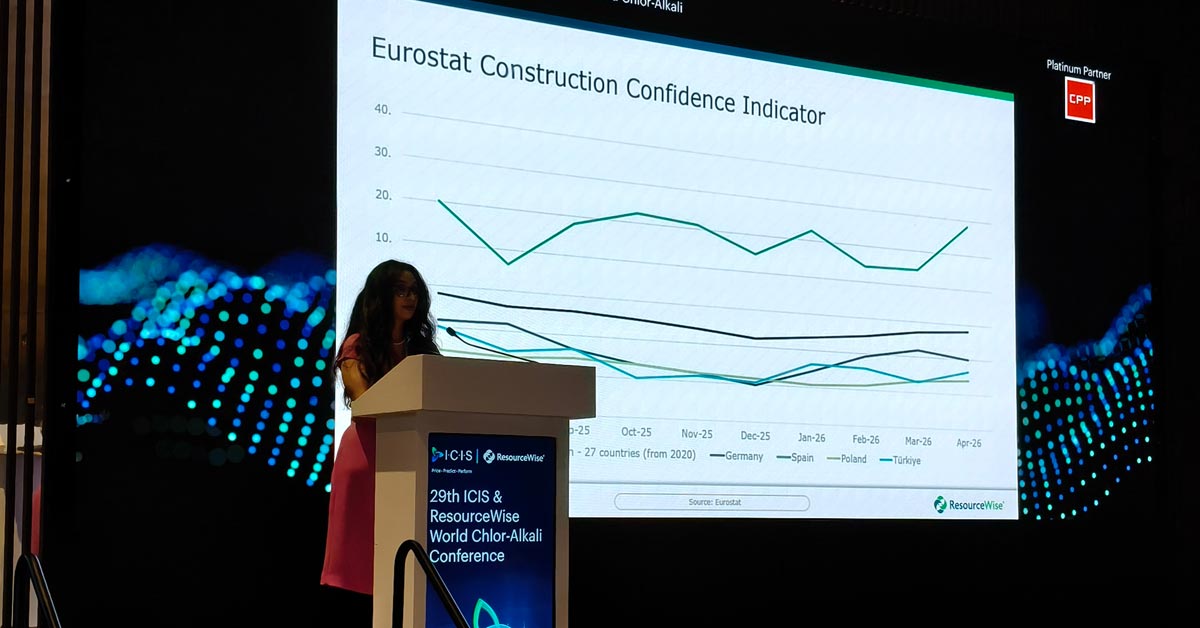
More insights from the recent World Chlor-Alkali Conference reveal an industry in flux. Europe's chlor-alkali and vinyls markets are facing a reset....