New IRS 45Z Guidance Tightens Link Between Feedstocks and Biofuel Economics
 ResourceWise: Oct 12, 2026, 2:25:00 PM

The European pulp and paper industry is entering a new phase—defined by constrained fiber supply, persistent energy volatility, and shifting global trade dynamics. In our recent webinar, ResourceWise VP of Business Development for Europe, Luis Sampaio, unpacked the key forces shaping the market and what they mean for producers, suppliers, and buyers navigating today’s uncertainty.
Europe’s pulp and paper market has always operated within a global ecosystem, but recent disruptions have accelerated structural change. Rising pulp production costs, tightening wood fiber supply, and ongoing energy price volatility in Europe are creating a more complex operating environment.
As discussed during the webinar, these factors are not temporary, they represent longer-term shifts that require strategic adaptation.
Fiber availability in Europe remains one of the industry's most critical challenges.
Key drivers include:
The result is sustained pressure on pulpwood prices and growing uncertainty around long-term sourcing. For many companies, this is driving a renewed focus on fiber procurement strategies and supply chain resilience.
Energy costs in the European pulp and paper industry remain a major concern.
Volatility in natural gas prices in Europe, combined with the region’s transition toward renewable energy, has created an unpredictable cost environment. For energy-intensive pulp and paper operations, this directly affects:
As discussed, companies are increasingly prioritizing energy efficiency, fuel diversification, and long-term energy sourcing strategies to manage risk.
The combination of high energy costs and constrained fiber supply is reshaping Europe’s competitiveness in the global pulp market.
We are seeing:
At the same time, Europe’s leadership in sustainable pulp and paper production and low-carbon initiatives continues to influence investment decisions and market positioning.
In this evolving landscape, market participants should focus on:
Access to timely, data-driven insights will be critical as companies navigate these overlapping challenges.
The European pulp and paper market is not just facing short-term disruption—it is undergoing structural change. Organizations that combine operational flexibility with robust market intelligence will be best positioned to adapt.
As fiber constraints persist and energy cost volatility in Europe continues to impact margins, the ability to anticipate market shifts—rather than react to them—will define competitive advantage. This is where data-driven insights become essential.
At ResourceWise, we equip industry leaders with the analytics and expertise needed to understand pulp and paper market trends, evaluate cost structures, and navigate uncertainty with confidence.
For a deeper dive into these dynamics—including regional cost comparisons, fiber supply outlooks, and evolving trade flows—you can access the full webinar discussion on demand.

 ResourceWise: Oct 12, 2026, 2:25:00 PM
 ResourceWise: Oct 9, 2026, 9:12:17 AM
 ResourceWise: Oct 7, 2026, 8:57:37 AM

 Marko Summanen : Mar 10, 2026, 3:02:53 PM
UPM and Sappi have signed a non-binding letter of intent to form a graphic paper joint venture, combining UPM Communication Papers with Sappi’s...
 Hira Saeed : Jul 7, 2026, 3:55:18 PM
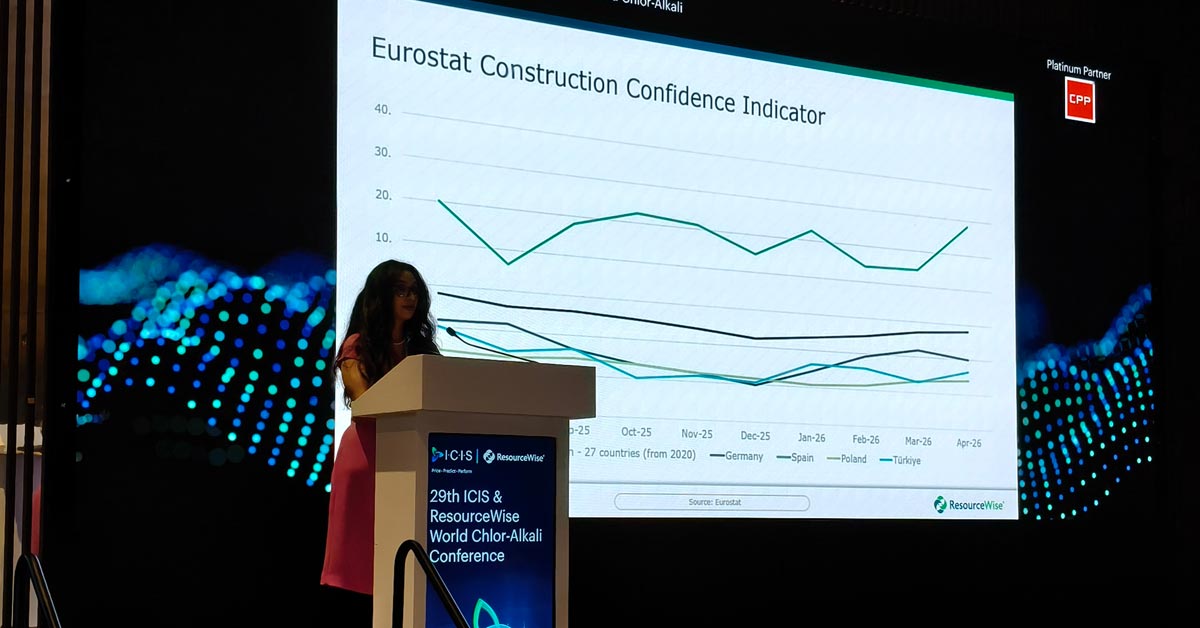
More insights from the recent World Chlor-Alkali Conference reveal an industry in flux. Europe's chlor-alkali and vinyls markets are facing a reset....