
New IRS 45Z Guidance Tightens Link Between Feedstocks and Biofuel Economics
 ResourceWise: Oct 12, 2026, 2:25:00 PM
Coordinated military strikes by the United States and Israel on Iranian targets in late February have triggered the most significant disruption to global energy markets since the early stages of the Russia–Ukraine conflict. Within days, oil prices rose by approximately 10–13%, pushing Brent crude toward the $80-per-barrel range, as shipping activity in the Persian Gulf slowed and tanker operators, insurers, and refiners reassessed their exposure to escalating regional risk.
The immediate concern extends beyond Iran's own oil production. Iran's geographic position gives it strategic influence over the Strait of Hormuz, the narrow maritime corridor through which approximately 20% of globally traded crude oil and substantial volumes of petrochemical feedstocks move each day.
In recent days, tanker traffic has slowed sharply, with vessel operators delaying or rerouting shipments amid rising insurance costs and security concerns. Even partial disruption to shipping flows through the Strait has the potential to constrain global supply availability and introduce sustained cost increases across energy and chemical markets.
For petrochemical markets, the implications are immediate and structural. Oil is not simply an energy commodity—it serves as the foundation of global chemical production economics.
Crude oil directly influences the cost of critical petrochemical feedstocks, including naphtha, LPG (propane and butane), and condensates. These feedstocks underpin the production of major petrochemical intermediates, including ethylene, propylene, methanol, and aromatics such as benzene, toluene, and xylenes.
As crude oil prices rise, feedstock replacement costs increase accordingly. Because global petrochemical pricing is influenced by marginal production costs, higher oil prices tend to raise production costs across multiple regions, particularly in Asia and Europe, where naphtha remains the dominant feedstock for steam cracking.
Even in regions with structurally advantaged feedstocks, such as North America's ethane-based production base, global pricing remains interconnected. Sustained increases in oil-linked production costs typically support higher global petrochemical price levels.
Geopolitical events affecting major energy transit routes can introduce oil price risk premiums ranging from approximately 10% to 25%, depending on the severity and duration of disruption concerns.
The Strait of Hormuz serves as the single most important global energy transit chokepoint. In addition to crude oil, the region facilitates the export of substantial volumes of LPG, condensates, and petrochemical products.
The Middle East collectively accounts for approximately 35–40% of global petrochemical exports, with major production centers in Saudi Arabia, Qatar, and the United Arab Emirates.
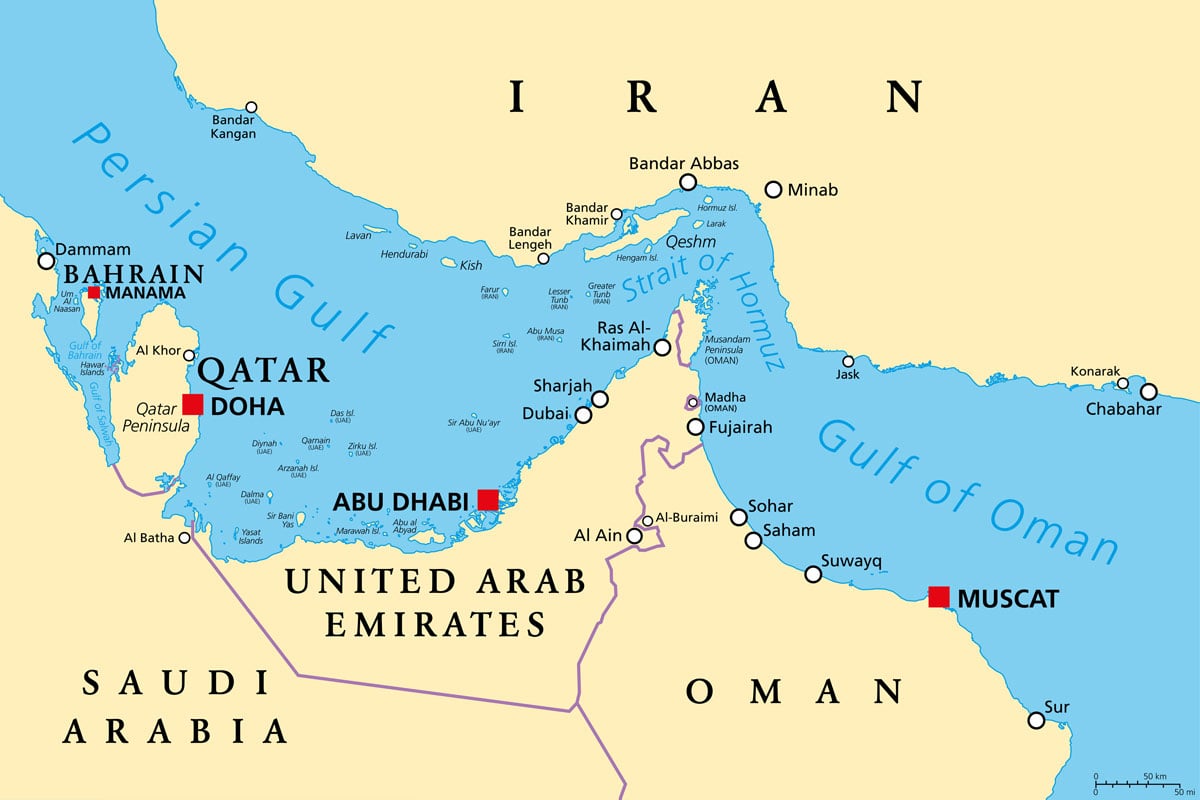
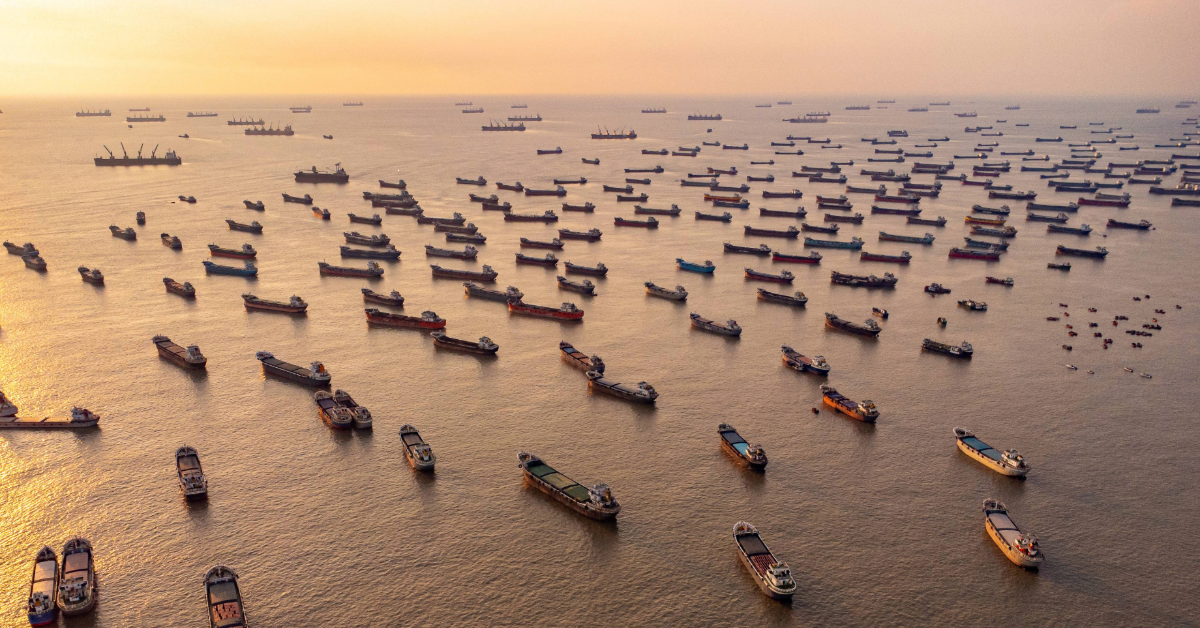
Image Source: Peter Hermes Furian, Adobe Stock
Disruption to shipping routes, marine insurance availability, or freight logistics can affect petrochemical markets even in the absence of direct production outages. Increased freight costs, shipping delays, or reduced vessel availability can raise delivered feedstock and chemical prices globally.
Estimates suggest that disruption affecting even a portion of the 8–10 million barrels per day of oil and feedstocks moving through the region could exceed available spare production capacity elsewhere in the near term.
In addition to crude oil and petrochemical liquids, the Strait of Hormuz serves as a critical transit route for global natural gas supply in the form of liquefied natural gas (LNG). Qatar, the world's largest LNG exporter, ships approximately 77–81 million tonnes of LNG annually, with virtually all of these exports transiting the Strait.
This creates significant exposure for global energy and chemical markets. Europe, in particular, has become increasingly reliant on LNG imports from Qatar and other suppliers following the reduction of Russian pipeline gas flows beginning in 2022. Any disruption to LNG shipments through the Strait could tighten natural gas supply availability and increase feedstock costs for gas-based petrochemical production, particularly in Europe and Asia.
Asian markets may experience particularly acute price volatility, as the region accounts for the largest share of global LNG demand. Rising LNG prices directly affect production economics for gas-based chemicals, including methanol, ammonia, and hydrogen, while also increasing operating costs across broader petrochemical value chains.
Beyond LNG, the Persian Gulf region represents one of the most critical production and export centers for both crude oil and petrochemicals globally.
Collectively, major Gulf producers—including Saudi Arabia, Iraq, the United Arab Emirates, and Kuwait—export approximately 15–18 million barrels per day of crude oil. While some alternative pipeline infrastructure exists, including Saudi Arabia's East-West pipeline to the Red Sea with a capacity of approximately 5 million barrels per day, alternative routes cannot fully compensate for disruption to Strait of Hormuz transit.
The region also plays a central role in petrochemical supply. Iran alone has petrochemical production capacity approaching 80–90 million tonnes annually, with substantial export volumes flowing to Asian markets, particularly China.
More broadly, the Middle East accounts for approximately 35–40% of global petrochemical export supply. Any sustained disruption to shipping routes, logistics, or export infrastructure could have material implications for global chemical supply balances.
In the immediate term, rising oil prices are expected to increase feedstock costs globally, particularly for producers dependent on naphtha and LPG.
Potential near-term impacts include:
If shipping disruption persists, secondary effects may emerge through adjustments in freight, logistics, and trade flows.
Increased marine insurance costs, vessel delays, and volatility in freight rates may affect the movement of petrochemical feedstocks and derivatives. These logistics constraints can increase delivered pricing and influence regional supply balances.
Producers outside the Middle East may benefit from improved relative competitiveness, particularly those with access to advantaged feedstocks and secure export infrastructure. Conversely, producers dependent on imported feedstocks or exposed to elevated freight costs may face additional margin pressure.
If disruption to Middle Eastern shipping or production infrastructure persists, global petrochemical supply chains could undergo further structural adjustments.
Potential longer-term effects include:
The extent of these impacts will depend on whether current disruptions remain limited to logistics and pricing volatility or evolve into sustained physical supply constraints.
What is now unfolding is not simply a price event, but a test of the physical and logistical infrastructure that underpins the global chemical economy. As vessels delay transit, insurers recalculate risk, and market participants reassess supply exposure, the reliability of the system itself has become part of the market equation.
The ultimate impact may not be determined solely by how high oil prices rise, but by how long uncertainty persists—and how producers, traders, and buyers respond to a supply chain whose stability can no longer be taken for granted.
The vulnerability extends beyond oil alone. From methanol plants in China to ammonia and hydrogen production in Europe, the chemical industry depends on natural gas and feedstocks that move through the same narrow maritime corridors. As LNG shipments slow and insurers recalculate risk, the consequences could ripple across value chains far removed from the Gulf itself.
 ResourceWise: Oct 12, 2026, 2:25:00 PM
 ResourceWise: Oct 9, 2026, 9:12:17 AM
 ResourceWise: Oct 7, 2026, 8:57:37 AM
ResourceWise : Mar 25, 2026, 3:57:08 PM
As conflict in the Middle East continues to disrupt energy flows, the impact is increasingly being felt across petrochemical supply chains—especially...
 Steve Wilkerson : Mar 19, 2026, 5:15:46 PM
The Situation Is Getting Worse The number of ships transiting the strait has dropped into the single digits—a stark contrast to the 60–80+ vessels...
![[Video] Molecules to Markets Episode 4: How the Iran Conflict Is Reshaping Global Chemical Markets](https://www.resourcewise.com/hubfs/images-and-graphics/blog/chemicals/2026/weekly-video-series-molecules-to-markets/CHEM-Weekly-Video-Series-Molecules-to-Markets-3-CHEMICAL%20PRODUCTS%20SOCIAL%20SPEAKER%20HIGHLIGHT%20(1).png)
ResourceWise : Mar 13, 2026, 3:48:51 PM
Geopolitical conflict often sends immediate shockwaves through energy markets—but the implications for chemicals and petrochemicals are more complex...