
New IRS 45Z Guidance Tightens Link Between Feedstocks and Biofuel Economics
 ResourceWise: Oct 12, 2026, 2:25:00 PM
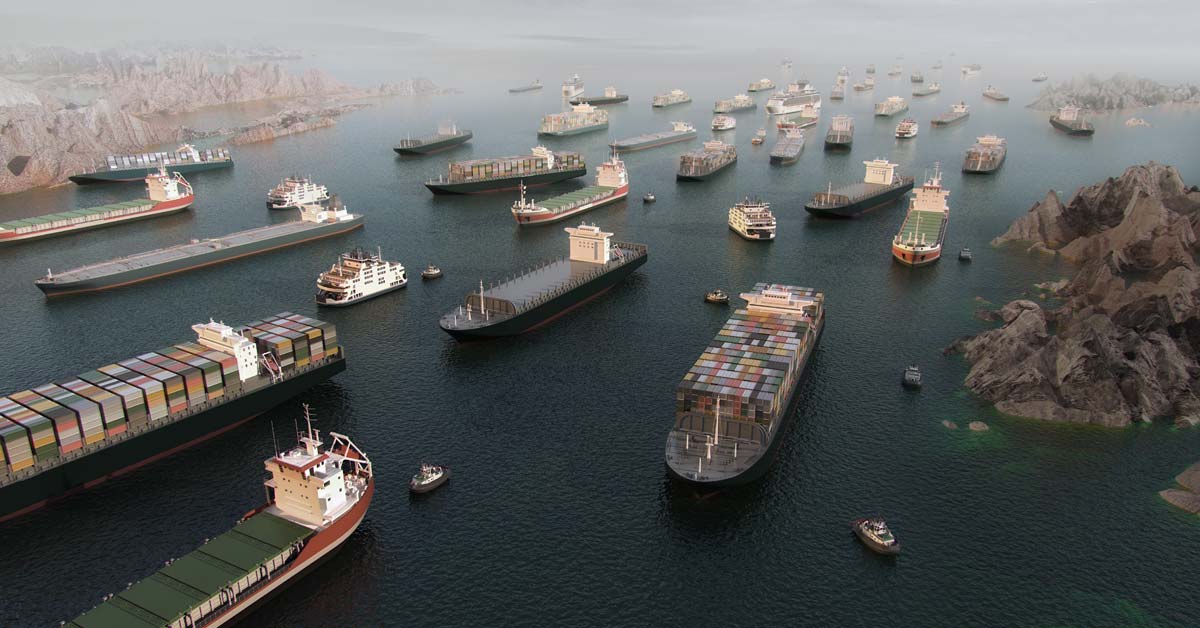
The bio-bunkering market is entering a new phase: one shaped not just by decarbonization targets and fuel innovation, but by geopolitical disruption.
The ongoing Iran war is rapidly reshaping global marine fuel dynamics, exposing structural vulnerabilities in fuel supply chains and accelerating shifts in how and where ships bunker fuel. For biofuels, the implications are significant.
ResourceWise’s latest Bio-Bunkering At a Glance: March 2026 report offers a detailed view into how these dynamics are unfolding across pricing, trade flows, and fuel availability.
At the center of the disruption is the Strait of Hormuz.
With the conflict now several weeks old, reduced flows of refined products from the Middle East, are tightening global fuel oil supply. The situation is further worsened by storage and production constraints in the region.
The impact is already visible in pricing.
According to the report’s March data, bio-bunker prices surged sharply following the Iran attacks. Some benchmarks show significant month-over-month increases across key hubs like Singapore and Rotterdam.
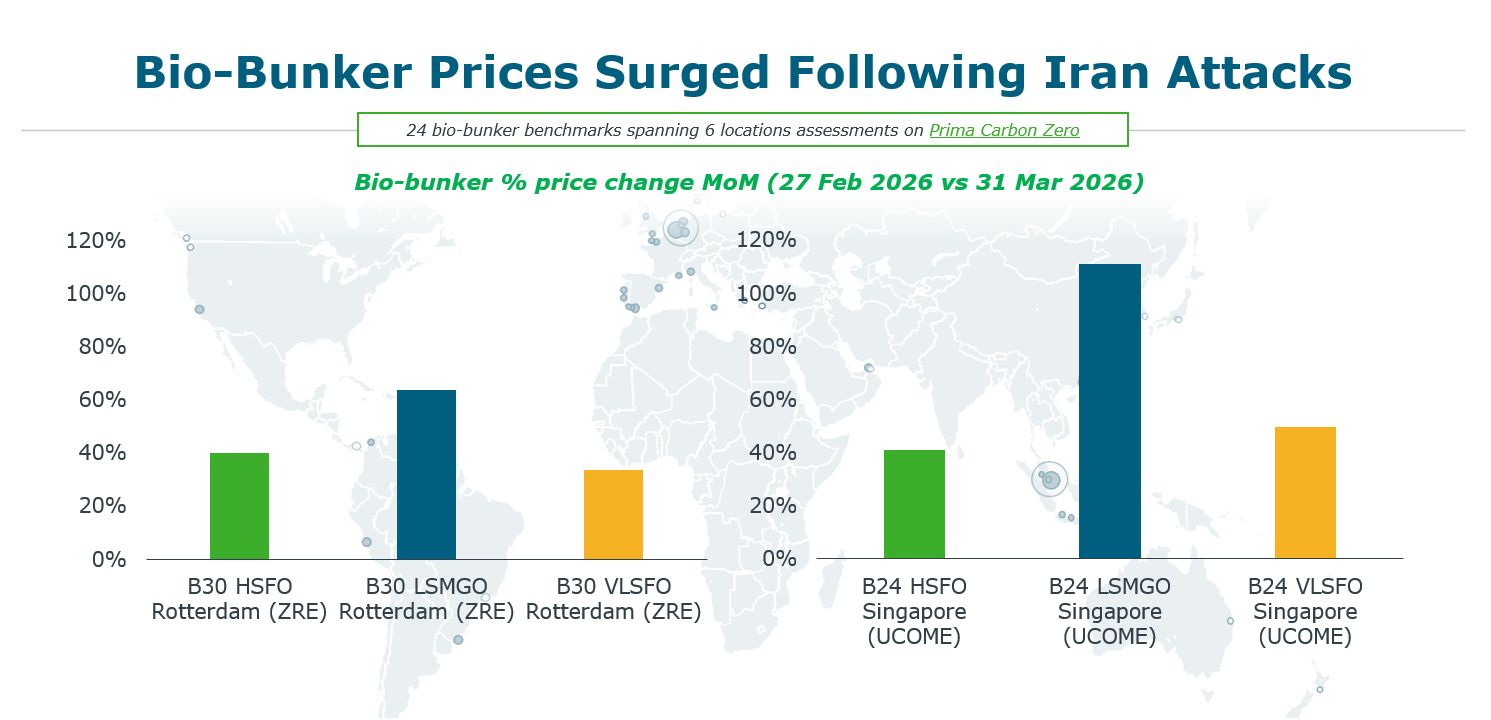
(Source: Prima CarbonZero)
At the same time, biofuel markets themselves are showing bullish momentum. They are driven not only by policy signals like the US RFS, but also by the broader energy market reaction to the conflict.
Related: Iran War Market Turmoil is Quietly Supercharging Biofuel Profit
This is a critical point: bio-bunkering is not insulated from fossil fuel volatility. It is increasingly coupled to it.
One of the most important insights from the report is that biofuels can help mitigate supply disruptions. But their help will only go so far.
As fuel oil imports into Asia tighten, especially at major hubs like Singapore, there is growing interest in increasing blending rates and redirecting biofuel flows. However, even under aggressive assumptions, the available supply of key biofuel components falls far short of replacing lost fossil fuel volumes.
In fact, maximizing export potential from major suppliers would only offset a fraction of the deficit in marine fuel demand.
This underscores a fundamental constraint in today’s market: bio-bunkering can support resilience, but it cannot yet scale fast enough to act as a full substitute during large-scale supply shocks.
The Iran war is also driving structural changes in how shipping routes and bunkering demand are evolving.
With vessels increasingly avoiding the Suez Canal and rerouting via the Cape of Good Hope, fuel demand is shifting toward alternative ports, including emerging hubs in Africa.
This is more than a temporary logistical adjustment. It is reshaping:
Where fuel is consumed
Where bio-bunkering infrastructure is needed
How suppliers think about regional market access
At the same time, rising freight costs and fuel price volatility are complicating bunkering strategies. These factors now require operators to balance availability, pricing, and route efficiency in new ways.
The disruption is not just physical; it is financial, too.
Shipping companies are already responding by introducing mechanisms to manage risk. For example, emergency bunker surcharges are being deployed to offset the impact of volatile fuel prices and uncertain supply.
This signals a broader shift. Fuel cost volatility is becoming a more central factor in shipping economics, and biofuels are part of that equation.
Meanwhile, upstream pressures are building as well. The report shows solid gains in feedstock prices, including used cooking oil (UCO) and POME, adding further upward pressure on biofuel costs.
Interestingly, policy frameworks like the EU Emissions Trading System (EU ETS) continue to shape long-term incentives. However, their short-term impact has been overshadowed by market forces.
EU ETS costs accounted for a relatively smaller share of total bio-bunker costs in March. Meanwhile, fuel price movements dominated overall economics.
This highlights a key dynamic in the current environment:
Policy defines direction.
Geopolitics defines pace.
The Iran war is acting as a stress test for the bio-bunkering market, and the results are mixed.
On one hand, the crisis is reinforcing the strategic value of biofuels as:
A diversification tool
A partial hedge against fossil supply disruptions
A part of the broader decarbonization pathway
On the other hand, it is exposing key limitations:
Constrained feedstock availability
Insufficient scale to replace fossil fuels in a supply shock
Growing exposure to global commodity volatility
Perhaps most importantly, it is accelerating the need for a more flexible, diversified marine fuel system. This includes biofuels, but it also extends to other alternatives such as methanol, LNG, and emerging low-carbon fuels.
These are just a few of the dynamics shaping the bio-bunkering market in the wake of the Iran war.

ResourceWise’s Bio-Bunkering At a Glance: Monthly Review provides deeper insight into:
Pricing movements across key hubs
Feedstock and biofuel market trends
Shifting trade flows and bunkering demand
The evolving role of biofuels in a disrupted energy system
For a complete view of the data and analysis behind these trends, download the full report now.

 ResourceWise: Oct 12, 2026, 2:25:00 PM
 ResourceWise: Oct 9, 2026, 9:12:17 AM
 ResourceWise: Oct 7, 2026, 8:57:37 AM

ResourceWise : May 8, 2026, 8:00:01 AM
As the Iran War continues to affect global fuel markets, several promising developments have emerged this month. Pulp mills have shown remarkable...
ResourceWise : Aug 12, 2026, 8:15:00 AM
After retreating in June, bio-bunker prices moved sharply higher in July as stronger feedstock values, rising biodiesel prices, and renewed...

ResourceWise : May 12, 2026, 9:01:10 AM
For years, the conversation around maritime decarbonization has often centered on a single question: which fuel will power the future of shipping?...