
New IRS 45Z Guidance Tightens Link Between Feedstocks and Biofuel Economics
 ResourceWise: Oct 12, 2026, 2:25:00 PM

We all know how quickly the global business landscape is shifting to Environmental, Social, and Governance (ESG) compliance. Even though it’s often folded into the ever-growing list of corporate buzzwords, it’s far more than that.
ESG has become central to sustainable growth and brand value and has influenced investor decisions. The call to action is universal for businesses across all industries: comply or be left behind.
As political action moves toward requirements such as biofuel blending mandates and environmental reporting, the time to move forward is now. With this increasing focus on ESG reporting comes much more scrutiny and demands for compliance.
The question isn't -if- you should start your ESG compliance plan. It's not even about when you should start. The time is right now.
To help get you moving, we’ve laid out five essential steps for companies to lay the groundwork for a robust ESG strategy.
Any solid ESG compliance journey starts with an honest and comprehensive assessment of your current performance. And we really mean it, here: it's time to lay it all out on the table.
Appraise your business operations through the lens of ESG. At this point, your goal is to uncover strengths to build upon and weaknesses to address head-on.
You will need to comply with all necessary regulatory frameworks and industry standards relevant to your business. This will serve as a benchmark to measure your current performance and determine improvements needed to achieve objectives.
Each department may contribute differently to ESG performance based on multiple factors:
If your company has department heads or managers, each one should collect pertinent data relating to environmental impact, employee welfare, and governance practices.
This cross-departmental approach ensures a more comprehensive understanding of where your business stands in the ESG spectrum.
Learn More: ESG risks that you can’t afford: Avoid business impact
After identifying the areas that need ESG improvement, the next step is setting clear and achievable objectives. Key Performance Indicators (KPIs) used at this stage must allow for precise measurement of progress.
ESG compliance is a marathon, not a sprint. Set objectives that align with your business's growth trajectory. Maintain a pace that allows for the effective incorporation of sustainable changes.
Establish a balanced "scorecard" that covers the full scope of ESG goals. Each KPI should be aligned with two main elements:
Implementing an ESG plan using well-defined KPIs is your pathway to achievable compliance. Develop a strategy that reflects your commitment to ESG goals while affirming your core business mission.
Your ESG plan should outline the actionable steps, timelines, and resources required to achieve your objectives. Divide larger sustainability milestones to maintain focus and track progress effectively.
Engaging relevant stakeholders across levels is pivotal in your plan. Whether it's your workforce, investors, or consumers, their involvement in the planning process ensures that expectations are clear. Their feedback can also be directly integrated into the strategy.
As an example, a small trucking company's actionable ESG plan might encompass these changes:
Execution is only the initial phase of the plan. Continuous monitoring and adaptation are integral to ESG compliance.
Regularly measure and analyze your KPIs. Your business must remain prepared to respond by recalibrating its strategies as you identify areas that require further attention.
Use real-time and historical data to evaluate the effectiveness of your ESG initiatives. This data will serve as the basis for informed decision-making on organizational changes required to improve performance in ESG areas.
The ESG landscape is dynamic as new regulations and best practices continually emerge. Adaptability is key here. Your goals must be flexible to remain compliant and aligned with current and future sustainable business practices.
Periodically review the achievability and relevance of your ESG objectives to ensure they remain effective. As your business grows and changes, it's essential that your ESG goals stay attuned to the company's needs and responsibilities.
ESG compliance isn't a one-time exercise. It's an ongoing shift in how decisions are made, measured, and communicated.
As markets evolve and expectations change, internal assumptions and static data quickly fall short. This is where access to reliable market intelligence and expert insight becomes essential.
Successful ESG strategies are grounded in real-world data that reflects what's happening across feedstocks, pricing, policy, and carbon markets. These data points go far beyond what's written in frameworks or guidance documents.
Understanding how regulations are changing, where cost pressures are emerging, and how carbon intensity is influencing commercial outcomes allows teams to move from compliance-driven reporting to informed, strategic action.
Just as important is context. Data alone doesn't answer ESG questions. Expert analysis does.
Analyst-backed insights help interpret market signals, anticipate risks, and identify opportunities that align sustainability goals with business realities. This kind of guidance is especially critical when ESG initiatives require operational changes, supplier decisions, or long-term investment planning.
Prima CarbonZero from ResourceWise brings these elements together, combining trusted market data with expert analysis in an intuitive online platform. With ongoing visibility into market dynamics and direct access to insights that support decision-making, teams are better equipped to adapt, stay compliant, and make progress with confidence.

 ResourceWise: Oct 12, 2026, 2:25:00 PM
 ResourceWise: Oct 9, 2026, 9:12:17 AM
 ResourceWise: Oct 7, 2026, 8:57:37 AM

ResourceWise : May 8, 2024, 12:00:00 AM
The call to prepare for ESG and sustainability reporting is growing louder every day. Despite this call, many companies say they're not ready to meet...
ResourceWise : May 29, 2026, 9:50:04 AM
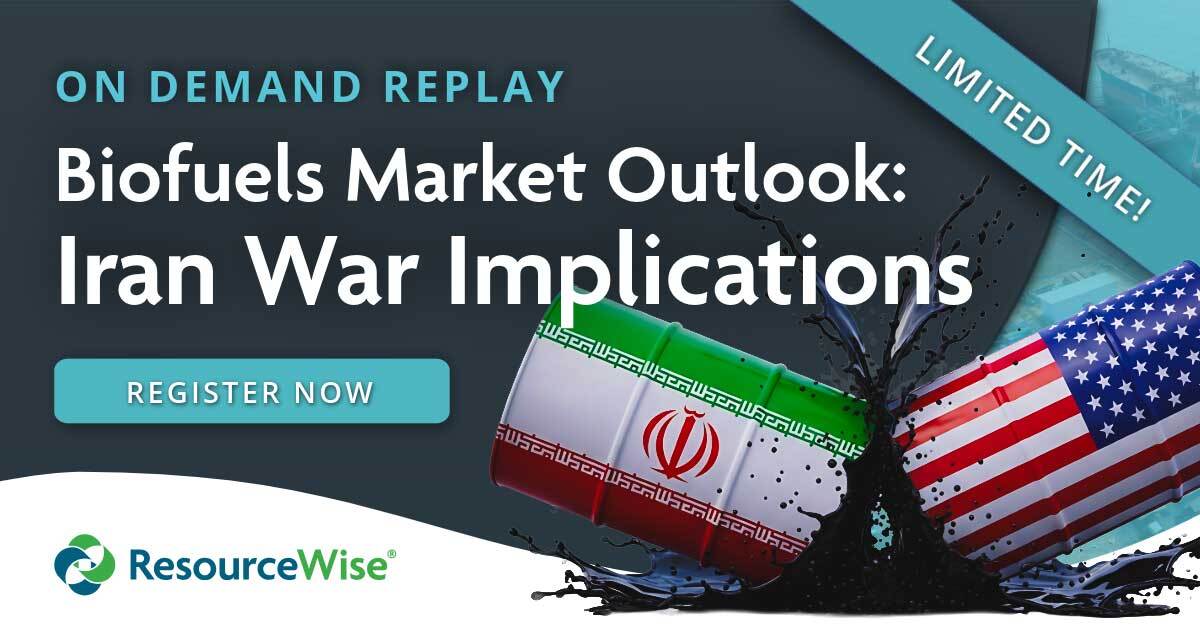
ResourceWise recently held a webinar on the biofuels market amid ongoing uncertainty stemming from the War in Iran. During the webinar, Matthew Stone...

ResourceWise : Apr 1, 2023, 12:00:00 AM
As ESG (Environmental, Social, and Governance) becomes a hotter topic in both the global finance sector and the world of consumer brands, several...