
New IRS 45Z Guidance Tightens Link Between Feedstocks and Biofuel Economics
 ResourceWise: Oct 12, 2026, 2:25:00 PM
As the aviation sector pushes toward decarbonization targets, Sustainable Aviation Fuel (SAF) is moving from long‑term ambition to near‑term commercial reality.
Insights from recent industry discussions indicate that the market is entering a pivotal phase in 2026. The climate is defined by growing airline demand, uneven policy support, tightening feedstock availability, and an evolving pricing landscape.
In this post, we break down the primary factors driving the SAF market as we move across the year ahead.
Airline net‑zero pledges remain the primary demand driver for SAF.
Major carriers continue to sign multi‑year offtake agreements, but not necessarily because SAF is cost‑competitive today. Instead, access is becoming a strategic necessity.
Demand growth is increasingly voluntary, but it's irreversible. Once airlines commit publicly, backtracking becomes a risk for damaging their reputation.
Looking ahead to 2026, demand is expected to rise steadily rather than exponentially. Airlines are prioritizing supply security and compliance over aggressive volume targets. This holds especially true as they navigate uncertain macroeconomic and ticket‑pricing environments.
Policy remains a critical yet inconsistent pillar of the SAF market. While long‑term signals such as ICAO’s CORSIA framework and national SAF blending ambitions provide directional support, near‑term implementation gaps persist.
Key takeaways from the discussion include:
In 2026, SAF growth is likely to concentrate in jurisdictions with clearer, bankable policy frameworks.
Feedstock availability remains the most significant limiting factor for SAF scale‑up. The transcript repeatedly underscores that SAF is not constrained by technology alone, but by competition for low‑carbon feedstocks.
Key dynamics include:
As a result, 2026 will likely see SAF producers favor incremental capacity expansions and flexible production strategies rather than large, single‑bet investments.
Read More: Feedstock Fundamentals: What Are Biofuels Made From?
SAF pricing is expected to remain well above conventional jet fuel through 2026. Cost reductions are anticipated over time. And near‑term economics depend heavily on incentives, corporate willingness to pay, and book‑and‑claim mechanisms.
Additional economic factors at play:
This reinforces SAF’s position as a strategic input rather than a commoditized fuel in the near term.
While often overlooked, infrastructure readiness is improving. Blending, certification, and airport logistics are advancing incrementally, reducing friction for SAF deployment.
However, infrastructure expansion is following demand, not leading it.
In 2026, infrastructure constraints are unlikely to cap demand outright. But they will influence where SAF volumes materialize.
The SAF market in 2026 will not yet reflect full‑scale transformation, but it will confirm trajectory. The year is shaping up to be a proving ground for:
Momentum is real, but it remains selective. Stakeholders who align supply, policy exposure, and demand strategy will be best positioned as SAF transitions from early adoption to mainstream deployment later in the decade.
Bottom line: 2026 may not necessarily be the breakthrough year. But it will be the year the SAF market shows whether its foundations are strong enough to support scale.
To make sense of the evolving SAF market in 2026, it helps to understand how the fuel itself is made and the pathways that feed into it. That’s where our biofuels eBook From Feedstocks to Fuel becomes a valuable companion resource.
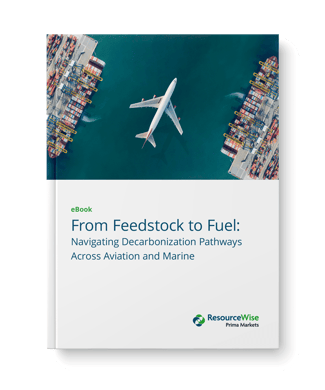 Whether you’re new to SAF or deep into strategy and procurement, the eBook breaks down the feedstocks, conversion technologies, lifecycle considerations, and sustainability frameworks that drive sustainable aviation fuel production. All of these factors are key to interpreting the demand signals, pricing dynamics, and policy incentives shaping the market today.
To deepen your understanding of the structural factors driving SAF growth and better anticipate where this industry is headed, our eBook offers the foundational knowledge needed to contextualize the market forces we’ve discussed here.

 ResourceWise: Oct 12, 2026, 2:25:00 PM
 ResourceWise: Oct 9, 2026, 9:12:17 AM
 ResourceWise: Oct 7, 2026, 8:57:37 AM
 Matthew Stone : Jan 9, 2026, 9:43:05 AM
Each year, we publish a forward-looking assessment of the forces shaping biofuels and feedstocks markets. As 2026 comes fully into focus, policy...
ResourceWise : Jan 8, 2026, 1:49:20 PM
As 2026 presses onward, it's important to reflect on the year past and what's to come. This month brings a mixed forecast for 2026, news in the UK's...

ResourceWise : Jun 4, 2025, 11:26:25 AM
This month, the growing risk of biofuels fraud continues to impact the industry with systems-level concerns and issues. Meanwhile, despite federal...