
How Is China’s Pulp and Paper Capacity Growth Affecting Global Markets?
 Marko Summanen: Sep 24, 2026, 1:55:19 PM
Not long ago, renewable diesel margins were relatively straightforward to interpret.
Producers and market participants could look at a handful of key inputs, including feedstock costs, fuel prices, and a few policy signals. Using these, they could build a reasonable view of profitability.
While volatility existed, the drivers behind it were generally visible and, to some extent, predictable. That is no longer the case.
Today, stakeholders are facing a different reality: margins that move unexpectedly, signals that seem to conflict, and outcomes that are harder to explain. This holds true even with more data at hand than ever before.
So, the burning question is what exactly changed, and why?
The renewable diesel market has evolved. What was once a relatively linear system has become something far more dynamic.
Instead of one or two dominant drivers, multiple forces are now acting on the market simultaneously. Feedstock costs may be rising while credit values are falling. Policy signals may suggest increased demand even as regional pricing weakens. Global trade flows can shift supply balances overnight, especially in wake of global events like the Iran War.
Read More: Iran War Oil Market Turmoil is Quietly Supercharging Biofuel Profit
Individually, none of these factors are new. Together, they create a level of complexity that is fundamentally different from what the industry has experienced before.
The result is a market that no longer moves in clear, predictable patterns. The challenge comes in understanding how these factors interact and the market signals they may show.
In response to this complexity, organizations have done what they always do: they’ve gathered more data. This includes more price points, more benchmarks, more reports, and more systems.
Yet for many teams, clarity hasn’t improved. In some cases, it has become worse.
Why is this the case? Because the challenge is no longer just about accessing information. It’s about understanding how different pieces of information relate to one another.
A change in one part of the market does not happen in isolation. It is influenced by and influences several other factors at the same time. Without a way to connect those signals, it becomes easy to misinterpret what’s actually happening.
What appears to be a pricing opportunity may be offset elsewhere. What appears to be a margin improvement may not hold under different policies or credit conditions.
In this environment, isolated data points can be misleading.
Another defining characteristic of today’s market is that volatility rarely comes from a single source.
Instead, it emerges from the interaction of multiple forces:
Each of these factors can move independently. But more importantly, they often move together, sometimes reinforcing each other and other times offsetting one another.
This makes it harder to answer a simple question: Why did margins move?
For many organizations, this complexity is showing up in day-to-day decision-making.
Trading teams are seeing opportunities that are difficult to validate across regions. Procurement teams are navigating feedstock markets that feel increasingly global and less predictable. Compliance teams are interpreting policy signals that don’t always translate cleanly into market outcomes.
At the same time, these decisions are often being made across different systems, datasets, and internal perspectives.
The result is a growing gap between the signals the market is sending and the decisions organizations can make with confidence.
The takeaway is not that the renewable diesel market has become unknowable or unexplainable. It’s that it now requires a different way of understanding.
Margins are no longer driven by a single variable or even a small set of variables. They are shaped by a network of interconnected forces that evolve in real time.
Seeing those forces individually is no longer enough. The true challenges and opportunities lie in understanding how they come together.
Because in today’s market, the difference between reacting to change and anticipating it often comes down to one thing: it’s not just having the data, but knowing how to interpret the bigger picture behind it.

 Marko Summanen: Sep 24, 2026, 1:55:19 PM

 ResourceWise: Sep 24, 2026, 8:45:24 AM
 ResourceWise: Sep 23, 2026, 8:57:48 AM

ResourceWise : May 7, 2026, 10:07:02 AM
What if the problem isn't a lack of data, but too much of it?

ResourceWise : Jun 25, 2025, 11:46:46 AM
ResourceWise recently held a webinar featuring Mat Stone, our Vice President of Low Carbon Fuels. He shared his expertise and vital knowledge of the...
ResourceWise : Aug 18, 2026, 8:41:56 AM
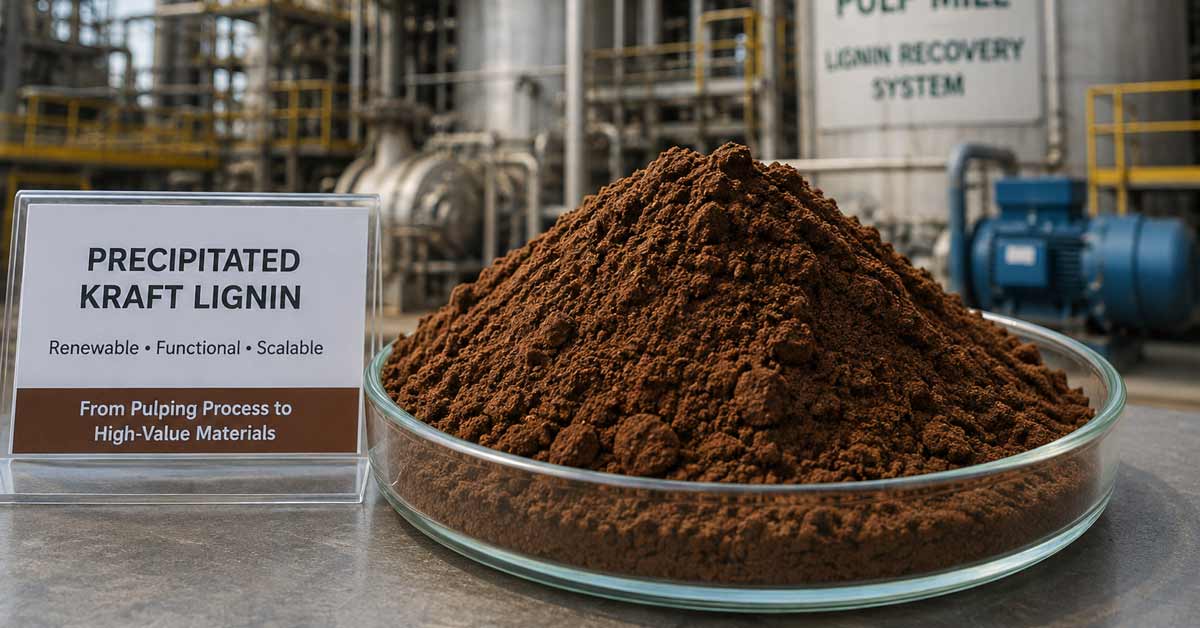
For decades, pulp mills have generated value primarily through the products at the center of their operations: pulp, paper, and packaging materials....