
Singapore Bio-Bunker Sales Are Down 70%. What's Happening?
 ResourceWise: Sep 8, 2026, 1:59:08 PM
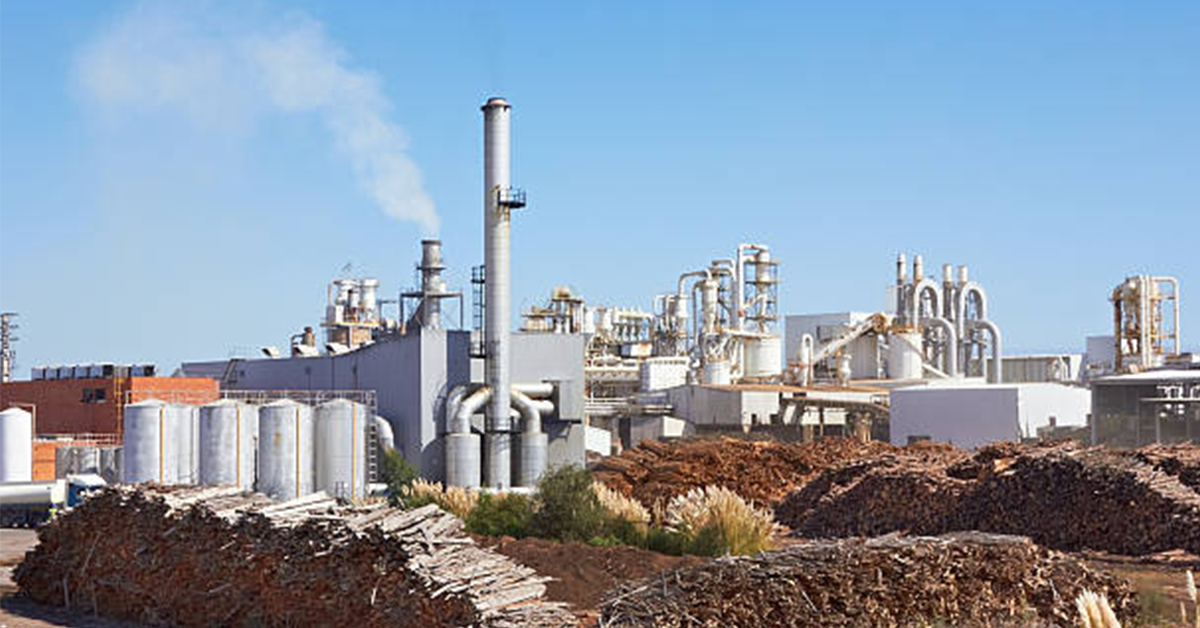
The pulp and paper industry has seen several notable announcements in April 2026. Taken together, they point to a few important themes: continued investment in fiber-based hygiene, ongoing pressure on pulp producers from wood and energy costs, and a growing advantage for integrated recycling and packaging models in Europe.
1. ARPULP Is Backing a Major New Fluff Pulp Project in Argentina
ARPULP’s Proyecto Ituzaingó is positioned as a large-scale industrial investment focused on high-value fluff pulp, with site materials describing potential output of up to one million tons annually. The company also frames the project around export competitiveness, biomass-based energy self-sufficiency, chemical recovery, and a sizable regional employment impact.
Why this matters: fluff pulp is a strategic grade tied to absorbent hygiene products, so this is more than a local mill announcement. It is a signal that investors still see room for new capacity where fiber supply, logistics, and long-term demand fundamentals line up. External reporting around the project has described it as a roughly US$2 billion investment in Corrientes and one of the most significant recent forestry-industrial bets in Argentina.
The broader implication is that capital is still available for the right pulp story: differentiated product, strong fiber basin, export logic, and a sustainability narrative that is central rather than optional.
Fibre Excellence has filed for insolvency after stating that it could no longer meet its short-term financial obligations. According to the company’s court filing and industry reporting, operations are continuing at its Saint-Gaudens and Tarascon/Provence mills while the insolvency process moves forward.
The filing follows a period of financial strain driven by higher wood costs, weak pulp market conditions, and losses linked to electricity generation. Reporting on the case said wood procurement prices had risen significantly since 2022, while the company also recorded substantial losses tied to power activity in 2025.
The development adds to ongoing pressure across the European pulp sector, where producers continue to manage volatile input costs and weaker pricing conditions in some grades.
Dunapack Packaging, part of Austria’s Prinzhorn Group, announced an agreement to acquire Stora Enso’s German corrugated packaging operations, including Gaster Wellpappe, Wellpappe Sausenheim, and PTI in southwestern Germany. The assets had around 350 employees and generated roughly €74 million in 2025 revenue, according to Dunapack. Prinzhorn said the deal supports geographic expansion and will also strengthen the group’s paper integration rate.
Prinzhorn is not just buying packaging capacity; it is extending a business model built around the full recycling loop. Its group structure spans recovered paper collection, containerboard production, and corrugated packaging conversion. In its own description, the company operates a closed-loop model across recycling, paper, and packaging.
That makes the strategic logic straightforward: Prinzhorn can likely make these assets more competitive by integrating them into a broader system. The group can pull levers across recovered fiber sourcing, paper supply, and packaging conversion in a way that a less integrated owner may struggle to match. That does not mean the assets were inherently poor. It means they may be more valuable within Prinzhorn’s loop than within Stora Enso’s portfolio.
The Stora Enso side of the equation matters too. Over the past year, Stora Enso has repeatedly emphasized a sharper focus on renewable materials and packaging, along with a leaner structure, more integration, and more cost-competitive production. It also reorganized reporting effective January 2026 to align with that strategy. That suggests ongoing portfolio discipline: even within packaging, not every asset necessarily remains core if it does not fit the company’s preferred operating model or capital priorities.
These developments reflect several current themes in the pulp and paper industry. New investment continues in projects tied to specific end markets such as fluff pulp. At the same time, some pulp producers remain under pressure from wood, energy, and broader market conditions. In packaging, recent transactions also suggest that asset performance can depend in part on how well those operations fit within a company’s broader system.
For industry participants, these announcements are a reminder that strategy, cost position, and operating model continue to shape outcomes across the sector. Staying current on these developments is important, particularly as companies adjust portfolios, invest in new capacity, and respond to changing market conditions. To keep up with industry news, subscribe to ResourceWise’s newsletter.

 ResourceWise: Sep 8, 2026, 1:59:08 PM
 ResourceWise: Sep 8, 2026, 8:57:11 AM
 ResourceWise: Sep 4, 2026, 8:59:42 AM

ResourceWise : Oct 12, 2023, 12:00:00 AM
The pulp and paper industry is a dynamic and ever-evolving sector. Staying informed about price trends, demand patterns, and strategic moves others...
ResourceWise : Sep 19, 2025, 10:48:19 AM
The global pulp and paper industry is undergoing a major shift. Market forces, sustainability mandates, and geopolitical factors are reshaping how...

ResourceWise : Jun 3, 2025, 12:22:04 PM
From inflation and freight disruptions to regulatory overhauls and billion-dollar mergers, the first quarter of 2025 has already proven to be a...