
New IRS 45Z Guidance Tightens Link Between Feedstocks and Biofuel Economics
 ResourceWise: Oct 12, 2026, 2:25:00 PM
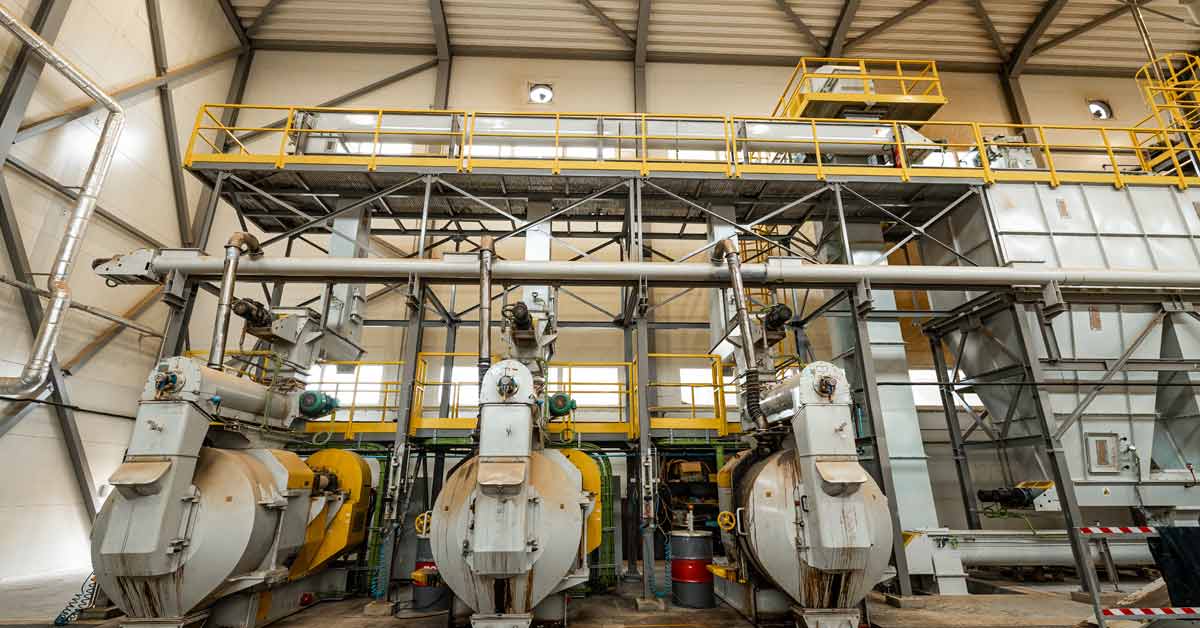
Advanced biofuels, renewables derived from non-food-based feedstocks such as agricultural and forestry wastes or cellulosic biomass, have long been pursued in the market. Their development and scaling could serve as a vital step in the carbon transition.
But several factors have kept advanced biofuels from broader adoption. Namely, high costs of materials and facilities remain immense challenges.
Despite these challenges, can we see a path forward to broad-scale adoption of advanced biofuels? A new European Commission report suggests that we can.
According to the European Commission’s latest analysis, a multifold increase in advanced biofuel industrial capacity is technically achievable within the European Union by 2030. The report argues that domestic production can be scaled sustainably and aligned with the EU’s broader climate and transport decarbonization objectives.
This marks an important shift in tone. The conversation is no longer centered on whether advanced biofuels are viable. Instead, the focus has turned to how quickly and under what conditions industrial capacity can expand to meet climate targets.
But feasibility does not necessarily equal inevitability. Reaching 2030 goals will require coordinated action across finance, policy, agriculture, and industry.
How do we get to this lofty target? The short answer: significant and sustained financial support.
The report estimates that between €3.8 and €7.5 billion per year would be needed through 2030 to build out advanced biofuel production plants across the EU. This funding would help bridge the gap between the Levelized Cost of Production (LCoP) for advanced biofuels and prevailing fossil fuel prices.
Without mechanisms to close that economic gap, private investment alone is unlikely to deliver this degree of scale.
In addition to industrial capital expenditures, the Commission identifies the need for €700 million to €1.25 billion annually to support feedstock mobilization. The support includes incentives specifically for farmers and biomass aggregators. This highlights that scaling advanced biofuels is not just a refinery challenge; it is a full value-chain undertaking.
Investment is not a single line item, then. It spans production infrastructure, agricultural systems, and long-term market stabilization.
Advanced biofuels depend on reliable, sustainable feedstock supply. Without this component, there is no progress.
The Commission's analysis underscores that increasing industrial capacity must go hand in hand with strengthening feedstock value chains. Farmers, biomass collectors, and aggregators are critical actors in the scaling process. Without predictable feedstock flows, plant construction alone will not translate into operational capacity.
This systems-level view signals a broader understanding of what industrial transformation requires. It's not just about technology deployment, but also about rural engagement, logistics coordination, and long-term agricultural alignment.
In other words, the future of advanced biofuels is as much about fields and forests as it is about the facilities that process them.
Read More: Feedstock Fundamentals: What Are Biofuels Made From?
Financial support alone will not deliver scale without regulatory coherence.
The EU Commission's report highlights the importance of administrative and policy alignment. Most importantly, we must see cooperation between the Common Agricultural Policy (CAP) and the Renewable Energy Directive (RED). Clear coordination between agricultural incentives and renewable fuel mandates is essential to ensure that supply and demand mechanisms reinforce one another.
The Commission also points to the need for improvements in sustainability certification systems and registries. Transparent and reliable implementation frameworks are fundamental for investor confidence and operational clarity.
In this context, advanced biofuel expansion becomes a governance challenge as much as a technological one. Policy alignment reduces uncertainty. And uncertainty is often the greatest barrier to capital deployment.
The report places advanced biofuels within a broader web of EU policy instruments:
This integration signals that advanced biofuels are not a peripheral solution. They are embedded in the EU’s structural approach to transport decarbonization and industrial competitiveness.
Such policy anchoring improves long-term visibility, a key factor in infrastructure-scale investment decisions.
No single technology will achieve these goals, and the EU Commission’s report makes that clear. A portfolio of complementary technologies and solutions will be required to fully utilize eligible feedstocks and meet renewable fuel objectives.
This diversified approach reduces systemic risk. It also acknowledges the complexity of decarbonizing transport across aviation, maritime, and road segments.
Rather than searching for a silver bullet, policymakers appear to be constructing a diversified toolkit.
The 2030 benchmark looms large.
The Commission's analysis frames this decade as decisive. The window for aligning investment, feedstock systems, and regulatory frameworks is narrowing. Achieving a multifold increase in industrial capacity will require action in the immediate years ahead.
Beyond 2030, even greater support may be needed to sustain deployment through 2040. But the foundational work must occur now.
In practical terms, the next few years will likely determine whether advanced biofuels remain an aspirational policy objective or evolve into a scaled industrial reality.
The Commission’s report makes clear that substantial investment, coordinated governance, and value-chain mobilization are prerequisites. However, it also sends a strong signal: the technical and structural foundations for rapid growth are present.
The question now is less about possibility and more about execution.
If policy alignment, financing mechanisms, and feedstock systems advance in parallel, the EU could see a transformative expansion in advanced biofuel capacity by 2030. And if that happens, the coming decade may be remembered not as a period of incremental progress, but as the moment advanced biofuels moved decisively into industrial scale.

 ResourceWise: Oct 12, 2026, 2:25:00 PM
 ResourceWise: Oct 9, 2026, 9:12:17 AM
 ResourceWise: Oct 7, 2026, 8:57:37 AM

ResourceWise : Jun 27, 2025, 8:00:00 AM
Note: This analysis reflects the Israel-Iran ceasefire announced on June 23, 2025. While the immediate crisis has eased, the insights highlight...

ResourceWise : Sep 5, 2025, 8:15:00 AM
ResourceWise recently hosted the webinar Finding Feedstocks: Biofuels Outlook Q4 2025, which you can now watch on demand. Matthew Stone, VP of...
ResourceWise : Sep 3, 2025, 9:51:13 AM
On-demand viewing is now available! You’re invited to watch ResourceWise's On-Demand webinar: Finding Feedstocks: Biofuels Outlook Q4 2025.