 Suz-Anne Kinney

The MarketWatch Blog is Transitioning to ResourceWise Forest Products
 Forest2Market: July 14, 2023
Part of this price appreciation is seasonal. Prices historically increase this time of year due to the wet winter weather, which restricts loggability and therefore supply. In some spots in the region, competition for this limited supply is driving the market. Mills are currently carrying low inventory as a result of the global recession. In order to meet demand that does exist, they are willing to pay more to get the necessary supply.
Other factors exerting price power include the determination of loggers and dealers to outlast the recession; some of these operators are paying higher prices because they need the work in order to stay in business. They are betting that operating at a loss in the short term will allow them to stay in business in the long term. They may also be betting on the matching payments from the Biomass Crop Assistance Program to help them make up these losses. BCAP is likely to continue to impact pulpwood prices in the South, unless the USDA acts to restrict the definition of eligible materials.

 Suz-Anne Kinney : November 6, 2013
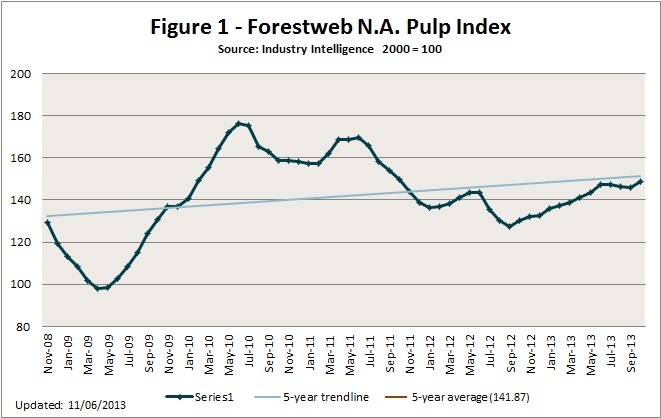
While the Forestweb North American Pulp Index continues to sit right below the five-year trendline, it has eclipsed the 5-year average of 141.87...
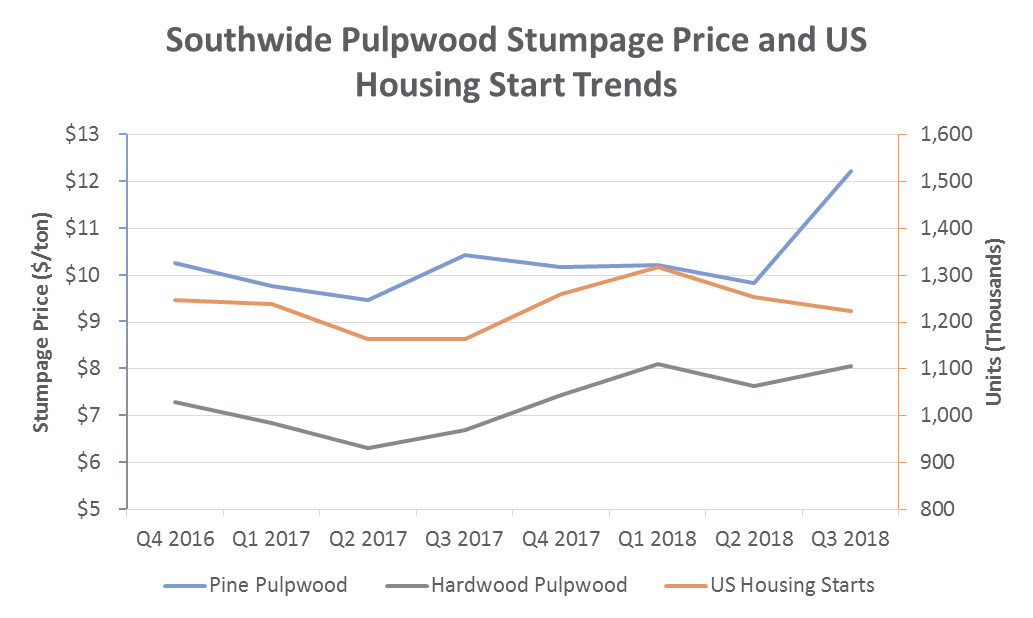
US South timber prices during 3Q2018 were mixed. Pulpwood products increased significantly and pine log products decreased slightly, but the general...
Fisher International : November 14, 2022
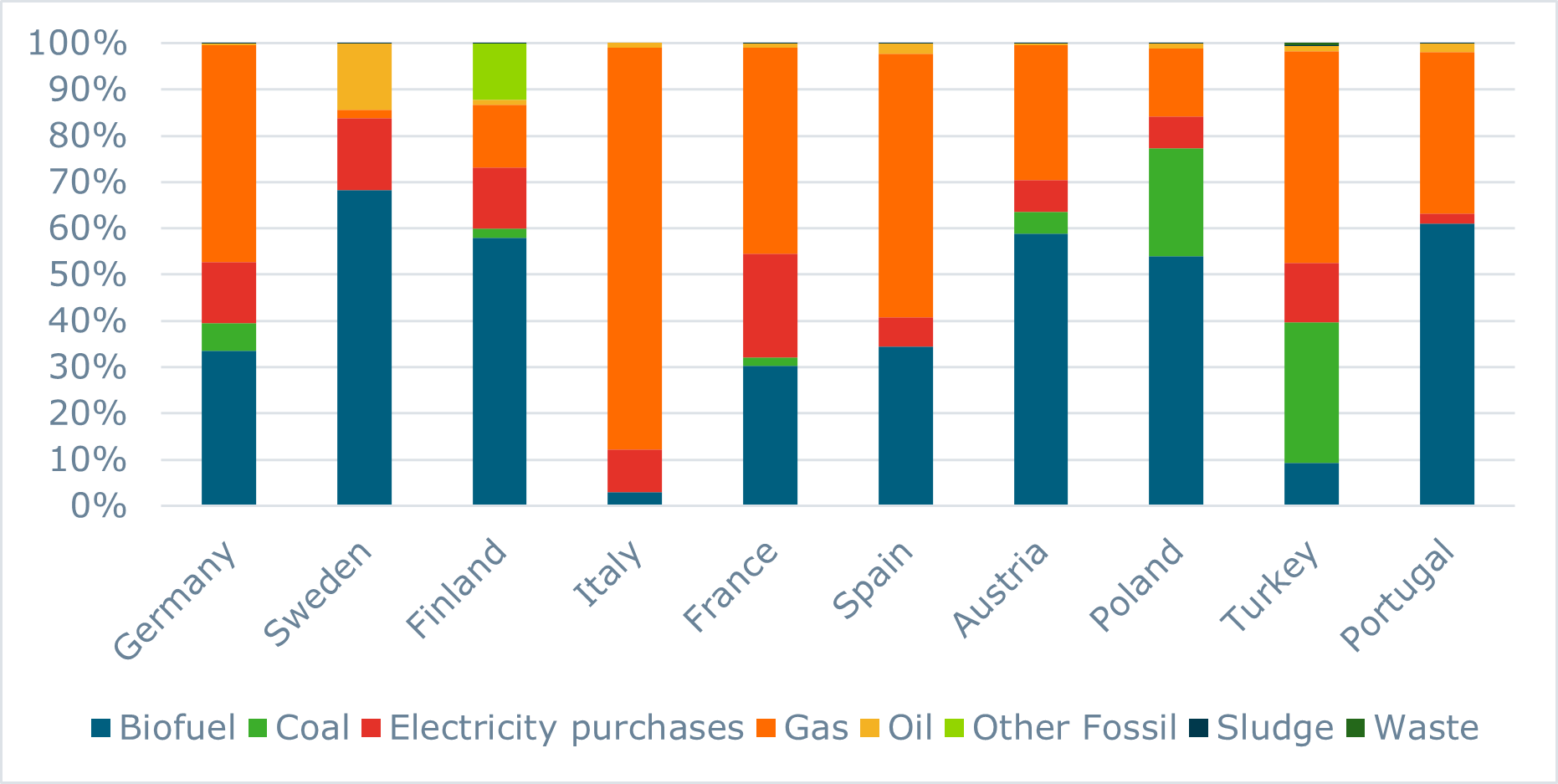
From individual consumers to executive meetings at major companies, energy consumption, the crisis that follows it and the uncertainty of the future ...