
1 min read

Online Seminar Answers Lumber Values Questions

Mississippi State University is offering a free webinar to help those in the timber business understand the changes being made this summer to lumber measurements and standards.

Southern Pine Design Values will be offered free online March 18 from 9 a.m. to noon. Registration is free, and only those registered will receive a link to the webinar.

“Recent changes in the design values of Southern pine lumber will affect us all,” said David Jones, event organizer and MSU Extension Service professor in the Forest and Wildlife Research Center’s Forest Products Department. “The strength properties of pine lumber are scheduled to change in a few months, changing the way new buildings will be designed and built.

“It has already changed the way that timber is bought and sold,” Jones said. “Some landowners are already having difficulty selling their timber because of the upcoming changes.”

The online workshop will address what design values are and how they are measured, what causes design values to change, and what the upcoming changes will mean to lumber producers, landowners and end users.

Contact Jones at (662) 325-8454 or pdjones@cfr.msstate.edu for more information.

The event is sponsored by the MSU Extension Service and the Forest and Wildlife Research Center.

KiOR Fails to Mind the Gap

KiOR Fails to Mind the Gap

Over the course of 2014, bad news has been mounting for KiOR. This image from an Industry Intelligence seach for KiOR provides the headlines. The...
Read More
Brazil’s Pine Export Market Braces for (Negative) Impact

3 min read

Brazil’s Pine Export Market Braces for (Negative) Impact

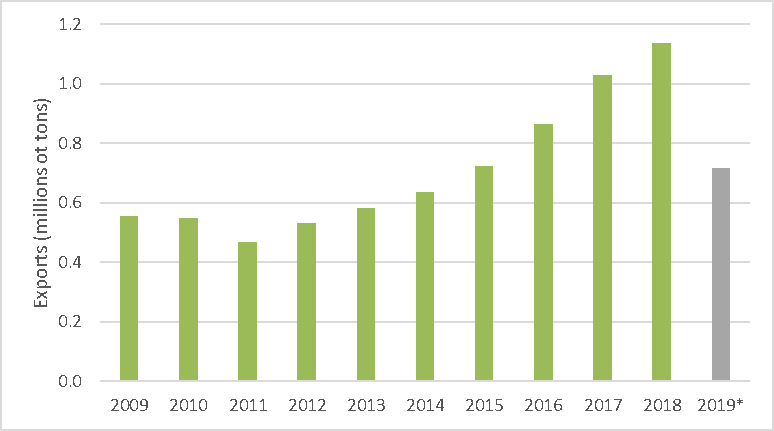
Forest management is a long-term activity and investment; it takes years of patience to reap the rewards of the effort that is sown both monetarily...
Read More
Steady Pace in Forest Industry Manufacturing with Only Slight Decline

Steady Pace in Forest Industry Manufacturing with Only Slight Decline

US forest industry performance in October and November 2022 was recently reported by both the US government and the Institute for Supply Management.

Read More