
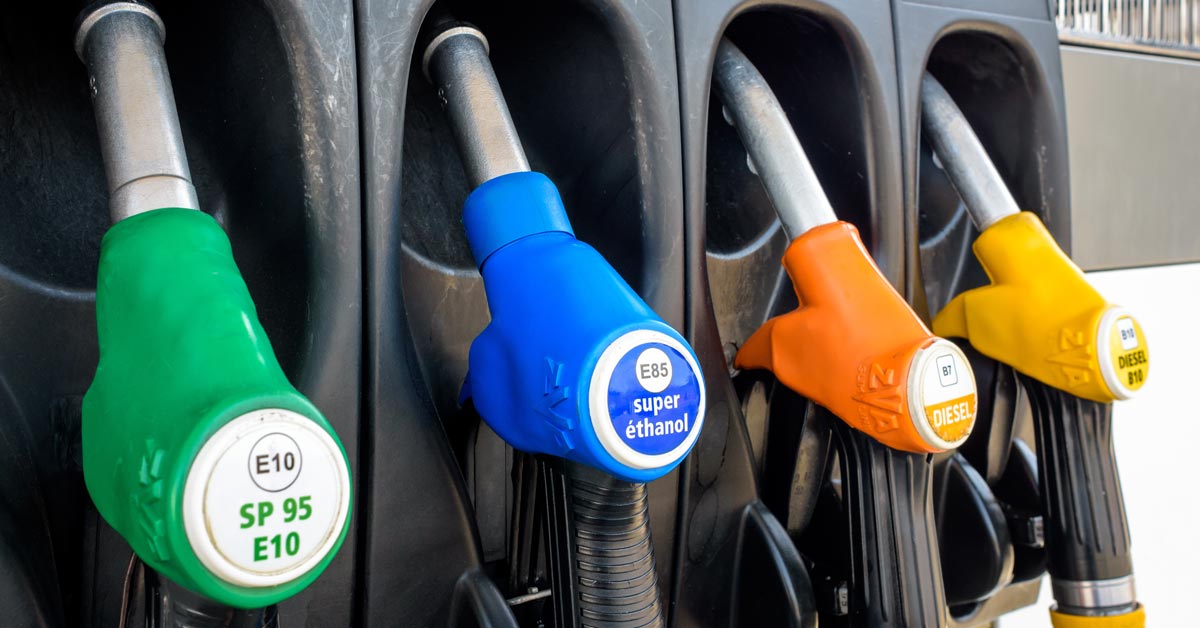
What Is Biofuel Blending and How Does It Work?
 ResourceWise: Sep 14, 2026, 2:40:15 PM
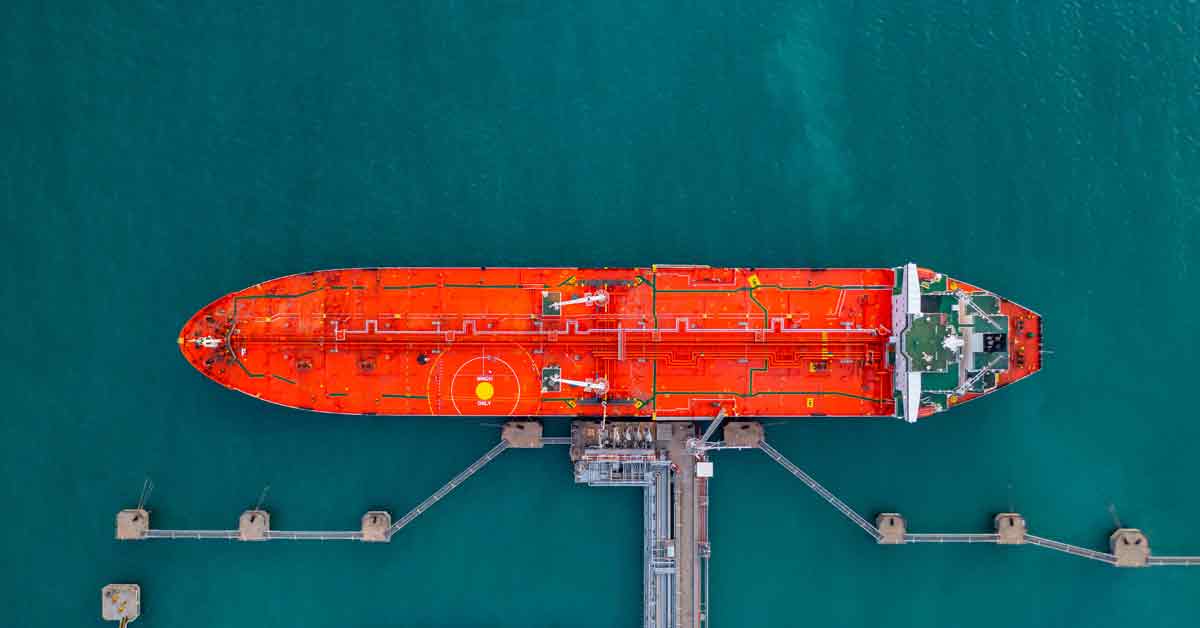
The International Maritime Organization (IMO) continues to push forward on its marine decarbonization agenda, reinforcing its commitment to achieving net-zero greenhouse gas (GHG) emissions from international shipping by 2050.
While last October’s delayed vote on the IMO Net Zero Framework introduced uncertainty around implementation timelines, the broader strategic direction remains unchanged. In recent weeks, the IMO has advanced several initiatives aimed at accelerating renewable marine fuel adoption and strengthening national-level maritime climate strategies.
These developments span Latin America, Africa, and the Caribbean. They signal continued institutional momentum behind alternative marine fuels, including biofuels.
A central pillar of the IMO’s decarbonization efforts is the GreenVoyage2050 program, which supports implementation of the 2023 IMO GHG Strategy.
Now in its second phase (2024–2030), the program focuses on helping partner countries:
For 2026, the IMO selected Colombia, Senegal, and South Africa as new partner countries. These additions expand a growing cohort of developing nations aligning national maritime policies with the IMO’s 2023 GHG Strategy.
National Action Plans serve as strategic roadmaps outlining how countries will reduce emissions from both domestic and international shipping where relevant. As these NAPs take shape, they could create regional pathways for the introduction and scaling of alternative marine fuels.
The expansion builds on momentum from 2025, further solidifying GreenVoyage2050 as a key mechanism for translating global strategy into national implementation.
The announcement follows a recent GreenVoyage2050 roundtable in Port of Spain, Trinidad and Tobago.
Discussions focused heavily on:
This emphasis reflects a critical reality: decarbonization goals require coordinated capital deployment across fuel production, bunkering infrastructure, and port modernization. Clear policy frameworks and national roadmaps are increasingly viewed as prerequisites for attracting private-sector investment into renewable marine fuels.
The IMO is also working with the European Union to advance a joint initiative titled “Future-Ready Shipping in Africa.”
The project is currently seeking maritime government stakeholders across sub-Saharan Africa to support:
A key component of the initiative is evaluating port and infrastructure preparedness for alternative marine fuels. Government entities and state-owned enterprises will receive support to assess bunkering and any gaps in infrastructure. This includes all necessary safety assessments, feasibility analyses, alternative fuel pathway determinations, and related business cases.
The fuels under consideration include:
This structured approach signals growing attention to practical deployment (and not just ambitions) in African maritime markets.
Another notable development comes from the Caribbean.
Barbados is exploring participation in green shipping corridors, with a study funded through the IMO’s Integrated Technical Cooperation Programme (ITCP).
The initiative builds on earlier GreenVoyage2050 work and aims to assess:
Green shipping corridors are emerging as a targeted pathway to accelerate the adoption of low- and zero-emission fuels. They help by concentrating policy alignment, infrastructure investment, and industry coordination along specific trade routes.
For smaller island states and trade-dependent economies, these corridors could become important testbeds for renewable marine fuel deployment.
Taken together, these initiatives demonstrate continued institutional momentum behind maritime decarbonization. Even amid policy and voting delays at the global level, this reflects a broader commitment to pursuing carbon reduction objectives.
Key implications include:
For the biofuels sector specifically, national-level planning and corridor development could create incremental demand growth as countries integrate alternative marine fuels into decarbonization roadmaps.
Procedural delays around the Net Zero Framework have undoubtedly invited temporary uncertainty. However, the IMO’s recent announcements suggest that implementation work is progressing steadily at the national and regional levels.
Marine decarbonization remains a long-term structural transition.
Programs like GreenVoyage2050, the EU-supported African initiative, and green corridor feasibility studies indicate that alternative marine fuels are moving from strategic concept toward infrastructure planning and execution.
For fuel producers, traders, and maritime stakeholders, the direction of travel remains clear. The movement is toward decarbonization, even if the pace and exact fuel mix continue to evolve.


 Sam Uctas: Sep 14, 2026, 1:23:22 PM
 Javier Rivera: Sep 14, 2026, 10:20:43 AM
ResourceWise : Jan 22, 2026, 2:46:08 PM
As the 2026 Clean Fuels Conference wraps up, the mood in the room is clear. This industry is no longer talking about what’s possible, but about what...

ResourceWise : Jun 4, 2025, 11:26:25 AM
This month, the growing risk of biofuels fraud continues to impact the industry with systems-level concerns and issues. Meanwhile, despite federal...
ResourceWise : Aug 20, 2024, 12:00:00 AM
The bio-bunkering market continues to see expansion with positive growth and increased demand in several key regions of Asia. While Singapore returns...