
 Audrey Dixon
New IRS 45Z Guidance Tightens Link Between Feedstocks and Biofuel Economics
 ResourceWise: Oct 12, 2026, 2:25:00 PM

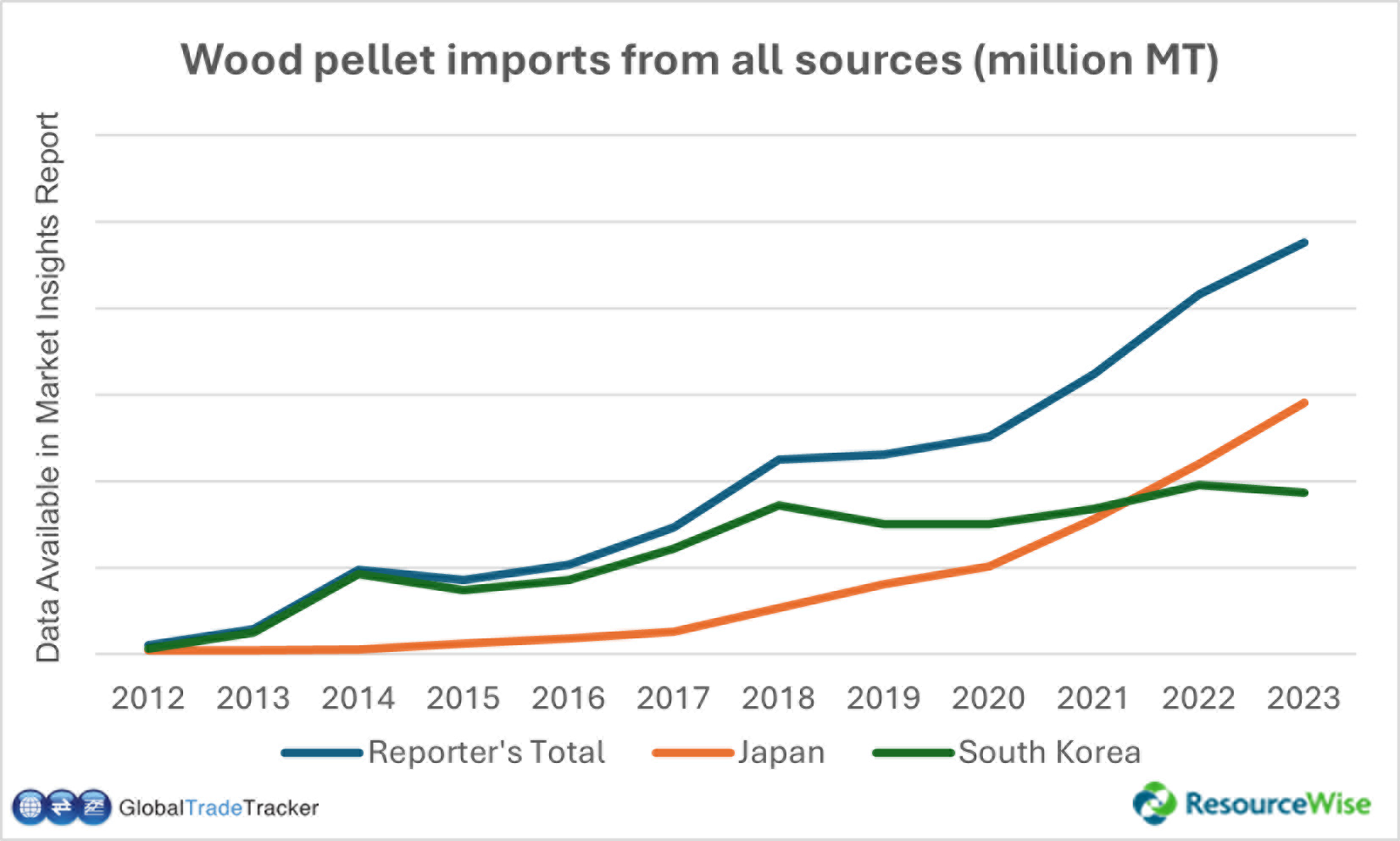
Japan and South Korea have played a key role in the rapid growth of global wood pellet demand over the last decade. Their efforts to replace coal and reduce carbon dioxide emissions have turned them into two of the largest pellet importers in the world. As the two countries set the stage for their energy policies in the coming years, forest products sector professionals will need to watch how that could influence wood pellet trade.
Since 2015, pellet imports into Japan and South Korea have increased by more than 500%. Japan now accounts for most of the imported volume. Vietnam, a key regional supplier, has seen its pellet export business grow alongside this demand, supplying over 90% of its wood pellets to these two markets in 2024.
This rise reflects more than just economic growth. It’s also tied directly to energy policy. As both nations push forward with decarbonization efforts, wood pellets have become a part of the mix—especially in Japan, where the government aims to increase biomass in its energy supply through 2040.
This rise reflects more than just economic growth. It’s also tied directly to energy policy. As both nations push forward with decarbonization efforts, wood pellets have become a part of the mix—especially in Japan, where the government aims to increase biomass in its energy supply through 2040.
However, many changes related to energy are under way. South Korea plans to cut biomass subsidies starting in 2025, raising questions about future demand. Japan, meanwhile, continues to invest in biomass but is also renewing its support for nuclear energy, which could shift its long-term strategy. These developments may create risks for pellet suppliers and exporters.
For companies involved in pellets, fiber supply, or trade strategy, keeping track of these policy changes is important. What happens next in Japan and South Korea could reshape sourcing, pricing, and trade flows across the region.
Understanding the future of the wood pellet trade requires clear data and expert insight. Our most recent Market Insights report offers a detailed breakdown of Asia’s pellet import trends, key policy developments in Japan and South Korea, and what they mean for producers, traders, and stakeholders across the forest products industry. For more information, download our report.

 ResourceWise: Oct 12, 2026, 2:25:00 PM
 ResourceWise: Oct 9, 2026, 9:12:17 AM
 ResourceWise: Oct 7, 2026, 8:57:37 AM

ResourceWise : Jul 20, 2026, 3:11:05 PM
For more than a decade, Vietnam has been one of the biggest success stories in the global wood pellet market. Fueled by strong demand for renewable...
ResourceWise : Apr 20, 2026, 2:18:39 PM
The global wood pellet market has grown steadily over the past decade as countries look for practical ways to reduce emissions and shift away from...
 Audrey Dixon : Oct 17, 2024, 12:00:00 AM
Japan and South Korea's efforts to diversify their energy mix and meet emission targets have led to a substantial surge in the import of wood...