Bioethanol Takes a Step Toward New Marine Fuel Market for US Producers
 ResourceWise: Oct 7, 2026, 8:57:37 AM
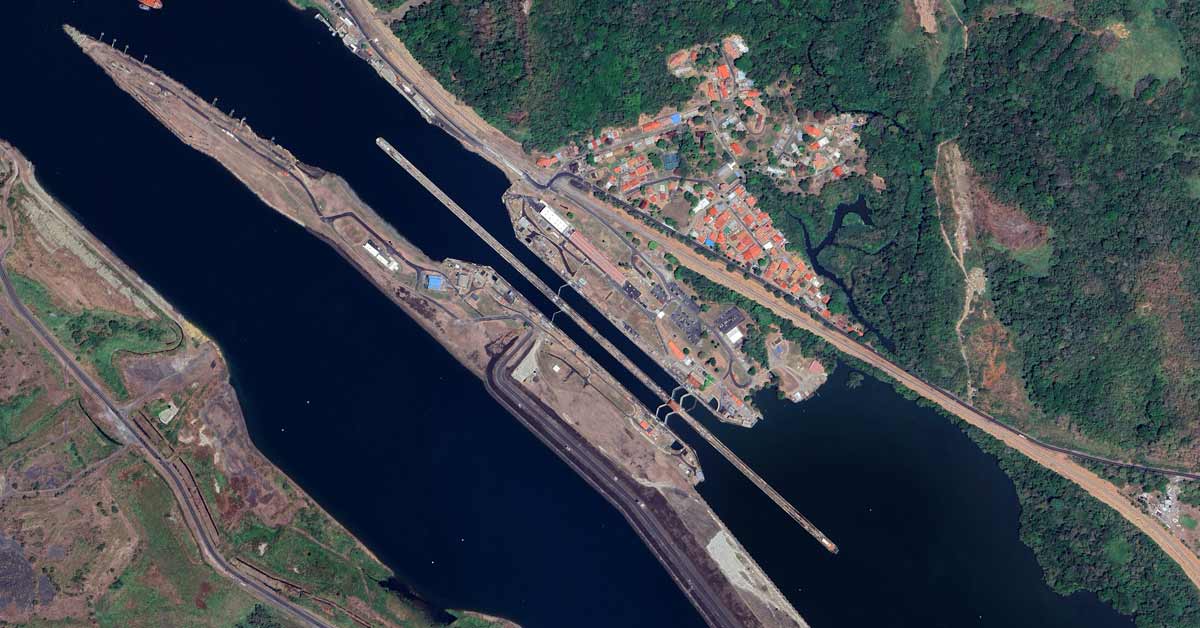
Low rainfall across the Panama Canal watershed has prompted the Panama Canal Authority to reduce the number of vessels allowed through the waterway beginning in September. For renewable diesel producers on the US Gulf Coast, those restrictions could complicate one of the key routes used to move product to California and other West Coast markets and potentially increase cost.
The immediate question is not whether renewable diesel can still reach the West Coast. It can.
The more important question is:
What will it cost to ship renewable diesel to the West Coast, and do the economics continue to make sense?
Shipping renewable diesel to the West Coast is likely to become more expensive as Panama Canal capacity tightens. The trade can still make economic sense, but higher transit and freight costs could narrow margins enough to redirect some Gulf Coast supply toward other markets.
On August 20, the Panama Canal Authority announced temporary reductions in transit capacity in response to lower-than-expected rainfall across the Canal watershed.
Beginning September 3, daily slots at the Neopanamax Locks will be reduced to nine, while Panamax Locks will initially offer 25. Panamax availability will tighten further to 23 daily slots beginning September 15.
The Authority is also changing how daily auction slots are allocated. Beginning September 3, vessels will be divided into four groups:
LNG and LPG carriers
Dry bulk and general cargo vessels
Container and vehicle carriers
Chemical, crude and product tankers
Renewable diesel shipments would fall into that final group alongside other liquid bulk cargoes. That introduces another variable into an already competitive transit system.
For vessels without secured reservations, fewer available transits could also mean longer waiting times. The Panama Canal Authority has explicitly encouraged customers to use its reservation system to reduce the risk of extended delays.
What does the lowered number of available transits in the Panama Canal mean for renewable fuel markets? At the heart of the issue, delays are rarely just a logistical inconvenience. Indeed, extended delays and other complications translate into increased costs across the transportation system.
Moving renewable diesel between the Gulf Coast and West Coast regions by sea typically means passing through the Panama Canal. The size of those flows can be significant.
The Gulf Coast is a major center of US refining and renewable diesel production. California and the broader West Coast also remain critical centers of low-carbon fuel demand. In short, the flow of this industry relies on regular passage through the Panama Canal.
According to the US Energy Information Administration, renewable diesel receipts into the West Coast from the Gulf Coast by tanker and barge reached 1.271 million barrels in May 2026, up sharply from 674,000 barrels in April.
Those monthly volumes are far from consistent, however. Since 2024, Gulf-to-West Coast movements have fluctuated considerably. The instability reflects changing supply, demand, and pricing conditions between the two regions.
That variability is important to consider. It shows that this trade route is already economically sensitive. Panama Canal constraints introduce another factor into the already delicate calculation.
Renewable diesel does not move simply because there is supply in one region and demand in another. The economics have to work as well.
A Gulf Coast producer considering a West Coast sale must account for several factors:
Product value at destination
Transportation expenses
Timing
Regional supply conditions
Compliance value available in the receiving market
If Panama Canal capacity becomes harder or more expensive to secure, that calculation changes.
Producers able to retain existing transit reservations may be relatively insulated from the disruption. But as available slots become scarcer, competition for passage could increase costs or delay unreserved vessels.
Those factors could narrow the arbitrage between Gulf Coast supply and West Coast demand. At some point, moving a barrel west simply becomes less attractive.
Rail and other overland logistics may become more important if Canal availability deteriorates. That could increase the delivered cost of Gulf Coast renewable diesel and potentially change how suppliers serve West Coast customers.
Another possibility is that some Gulf Coast production simply stops moving west.
If the cost or uncertainty associated with Canal transit becomes too high, producers could instead seek alternative domestic buyers or export opportunities where the economics are more favorable.
That means the effect of Panama Canal restrictions could extend far beyond freight rates. They could influence where renewable diesel flows, which markets compete for available supply, and ultimately where producers can capture the strongest netback.
Transit availability is not the only issue under consideration.
The Panama Canal Authority has also been managing vessel draft restrictions in response to water levels in Gatun Lake.
A planned reduction in the maximum authorized Neopanamax draft to 14.63 meters has been postponed until September 2. A further reduction to 14.48 meters has also been postponed until October 1.
These draft measures are separate from the reductions in daily transit slots. Taken together, they illustrate how closely Canal operations are now tied to changing hydrological conditions.
The Authority has also warned that weather conditions are evolving rapidly and that further operational adjustments could become necessary. That uncertainty may be just as important to markets as the restrictions already announced—particularly in the wake of this year's El Niño.
The Panama Canal situation highlights a broader reality across renewable fuels markets.
Policy, feedstock supply and production capacity may attract most of the attention. But physical logistics can be just as important in determining market outcomes.
A drought in Central America can ultimately affect the economics of moving renewable diesel between two US regions. That connection matters for producers, traders and buyers alike.
The renewable diesel will still be available. But the increasingly important question becomes:
Can renewable diesel economically reach the market where it carries the most value?
If Canal restrictions persist or tighten further, market participants will need to watch much more than available transit slots. They will also need to assess several other factors:
Freight costs
Reservation availability
Alternative transportation economics
Price relationships between Gulf Coast and West Coast markets
The Panama Canal is just one example of how quickly conditions outside the traditional biofuels market can influence pricing, trade flows, and supply availability. Weather disruptions, shifting regional economics, policy changes, and feedstock constraints can all alter the market outlook. And they often interact in ways that are difficult to assess in isolation.
On September 3 at 10:00 AM ET, join ResourceWise for our live Biofuels Market Outlook: Q4 2026 webinar. We’ll examine what changed during Q3 and the signals that could matter most as the market moves into the final quarter of the year.
The discussion will cover:
Biofuel pricing and market direction
Changing feedstock fundamentals
Key US policy developments including 45Z
European and Asian market dynamics
Emerging feedstocks
Latest developments across SAF and marine biofuels
The goal is to provide a clearer view of the forces affecting supply, pricing, margins and commercial decisions across the global market.

 ResourceWise: Oct 7, 2026, 8:57:37 AM
 ResourceWise: Oct 5, 2026, 11:42:56 AM

ResourceWise : Sep 16, 2026, 8:50:09 AM
US diesel prices have climbed sharply, but consumption has proved surprisingly resilient. That response reveals something fundamental about the...
ResourceWise : Mar 25, 2026, 3:57:08 PM
As conflict in the Middle East continues to disrupt energy flows, the impact is increasingly being felt across petrochemical supply chains—especially...

ResourceWise : Aug 26, 2025, 8:00:00 AM
The UK’s Trade Remedies Authority (TRA) has proposed new anti-dumping duties on biodiesel imports from China following an investigation that found...