

The ResourceWise U.S. Unbleached Corrugated Box Cost Index: A Cost-Based Alternative for Corrugated Contract Price Adjustments
 ResourceWise: Oct 2, 2026, 9:37:04 AM
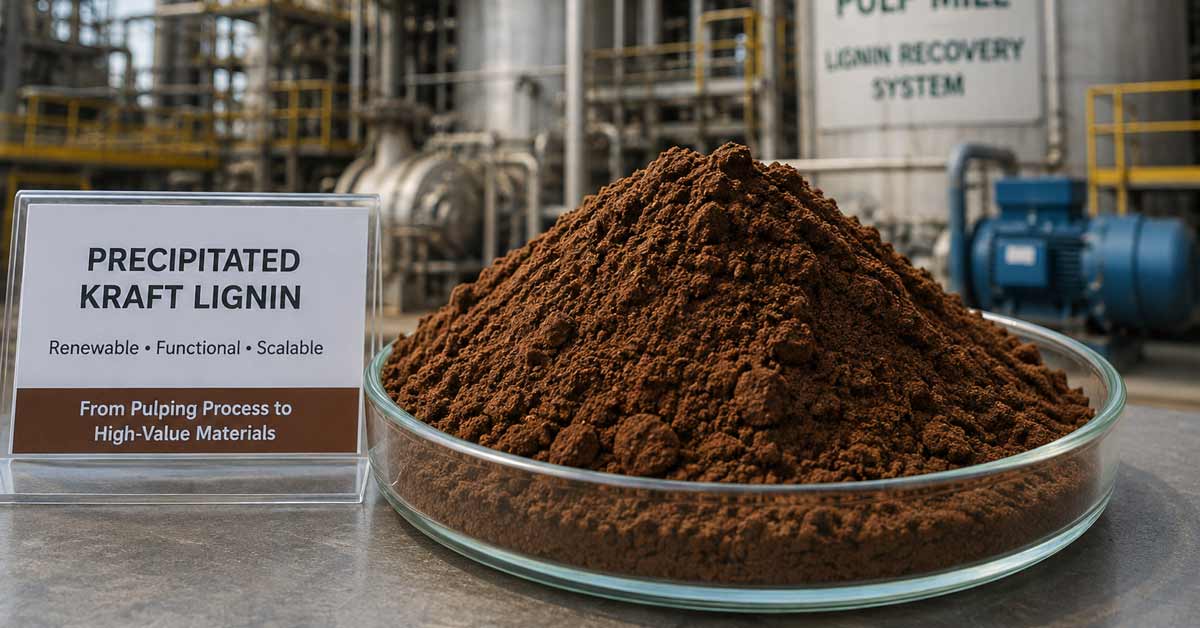
For decades, pulp mills have generated value primarily through the products at the center of their operations: pulp, paper, and packaging materials. But the sector's economics are beginning to broaden.
Increasingly, materials once treated primarily as process streams or lower-value byproducts are being examined for their potential in fuels, chemicals, and advanced materials. ResourceWise's most recent Pulp Mill Bio Solutions Monthly Newsletter highlights this shift, noting that products such as lignin stand out.
Lignin, a natural polymer in plant cell walls that is separated from cellulose during the pulping process, is already present at an enormous scale within the pulp and paper value chain. The commercial opportunity is therefore not simply about producing another bio-based material. It is about determining whether mills can transform an existing stream into products that can compete in established chemical and materials markets.
That opportunity is attracting attention across the sector. Circular-economy initiatives, regulatory pressure, and demand for lower-carbon materials encourage manufacturers to look beyond traditional petrochemical feedstocks. But the path from available biomass component to scalable commercial product is far from guaranteed or automatic.
The broader push toward bio-based and circular materials is a central driver of lignin development. Sustainability and regulatory pressure, industrial demand, and the pursuit of higher-value applications are key drivers behind lignin initiatives. Asia Pacific is the fastest-growing region, followed by Europe.
For pulp producers, that creates an interesting strategic proposition.
Instead of viewing lignin predominantly through the economics of the pulping process, producers can explore the highest-value market this material can serve.
Energy is the immediate answer. Lignin could be appealing to the energy sector because it is a renewable, carbon-rich component of biomass with significant energy content. It is useful both as a fuel itself and as a potential feedstock for producing lower-carbon fuels.
Through processes such as pyrolysis, gasification, or catalytic conversion, lignin can potentially be upgraded into bio-oils, renewable hydrocarbons, hydrogen, or other fuel intermediates. For pulp mills, the opportunity is to move lignin beyond its traditional use as an on-site energy source and determine whether converting it into higher-value renewable fuels or fuel feedstocks can generate more value. This is especially appealing as demand for alternatives to fossil-derived fuels grows.
Beyond energy, several other applications are possible for lignin:
Polymers
Composites
Adhesives
Carbon Materials
High-value Chemicals
Concrete Additives
Dispersants
Binders
Emerging uses extend further into biomedical products, energy storage, and environmental applications. That breadth is important because it gives lignin more than one potential route to market.
A mill does not necessarily need lignin to become a wholesale replacement for a single incumbent material. Instead, different lignin grades and processing technologies may ultimately find different niches across construction, specialty chemicals, polymers and other materials markets.
This is precisely the space where the commercial case gets more interesting.
The bio-based nature of lignin may help unlock some untapped potential. But sustainability alone does not guarantee commercial adoption. One of the greatest challenges this potentially emerging market faces is cost competitiveness with petrochemicals.
That is particularly important because the incumbent material markets lignin may seek to enter are themselves highly dynamic.
For example, ResourceWise data shows North American ABS prices declining as lower feedstock costs strengthened buyers' negotiating position. Korean material remained competitive, while European producers faced pressure from lower-priced Asian imports.
Polypropylene markets tell a similar story. North American prices remained under pressure amid ample supply and weak demand. Meanwhile, European pricing softened as supply improved and competitive offers circulated.
These conditions illustrate a fundamental challenge for emerging bio-based materials. A lignin-derived product does not compete against a static petrochemical benchmark. It competes against markets in which feedstock costs, operating rates, international trade, capacity and demand continually reshape the price buyers are willing to pay.
When conventional polymer prices decline, the economic hurdle for bio-based substitutes can rise. That does not eliminate lignin's opportunity. But it means producers and developers need to understand not only the technical performance of a lignin-derived material, but also the market into which it will be sold.
Cost is not the only barrier for lignin. Several technical and processing challenges, along with quality, consistency, and standardization, are obstacles to greater commercialization.
Manufacturers design processes around materials that meet predictable specifications. A raw material that varies across batches can introduce production risks, quality-control issues, and additional downstream costs.
That creates an important transition for lignin. To function as a commercially traded industrial input, it increasingly needs to behave like one. That can require greater control over purification, composition, processing and product specification. It may also require closer collaboration between pulp producers, technology companies and end users to establish exactly which characteristics matter for particular applications.
In other words, successful lignin commercialization may depend on moving from the question:
Can this material work?
to the more demanding question:
Can this material perform consistently, at scale, and at a price customers can accept?
The wide range of possible lignin uses can be both a strength and a complication.
Energy and fuel applications may provide relatively large-volume outlets. Chemicals, additives and engineered materials may offer greater value per unit. But they require more processing or tighter product specifications.
Emerging applications such as energy storage or biomedical materials could potentially create still higher-value opportunities. But they may also involve longer development timelines and greater technical barriers.
That suggests there may not be one universal lignin market. Instead, the emerging industry is likely to involve a spectrum of products differentiated by processing, purity, performance and end use.
For pulp mills assessing investment opportunities, this distinction is crucial.
Maximizing lignin value may not necessarily mean pursuing the application with the highest theoretical selling price. Producers also need to consider multiple other factors:
Market Size
Qualification Requirements
Processing Costs
Customer Concentration
Demand Reliability
The most attractive opportunity will ultimately be the one where technical capability and market economics intersect.
This transition also changes the type of information pulp producers need.
If a mill is evaluating lignin solely as an internal energy source or process stream, the decision is primarily operational. Once that same material is considered for external markets, the analysis becomes much broader.
Producers need visibility across several areas:
Competing Materials
Regional Pricing
Demand Trends
Trade Flows
Downstream Market Conditions
For a potential polymer application, petrochemical resin economics suddenly matter. For construction additives, developments in infrastructure and building markets become relevant. For specialty chemicals, producers need to understand both competing feedstock costs and the value customers place on lower-carbon alternatives.
That is one reason the growing bioeconomy is increasingly connecting industries that were previously analyzed separately.
Forest products, chemicals, fuels and carbon markets are becoming more intertwined as the same biological feedstocks compete for multiple end uses. The long-term potential for lignin across these markets is significant. But simply having access will not be enough.
Pulp mills best positioned to capture additional value are likely to be those that can connect feedstock availability with product consistency, appropriate processing technology and a clearly defined downstream market.
That means answering several additional questions before committing capital:
Which lignin applications offer sufficient market scale?
What specifications do customers require?
How much additional processing is needed to meet them?
What incumbent petrochemical product is the lignin-derived material competing against?
How volatile is that incumbent market?
Does the bio-based attribute generate a meaningful premium or strategic advantage?
Does the additional value outweigh the cost of upgrading the material?
These questions move lignin firmly beyond the realm of waste reduction or sustainability initiatives. They place it within the same commercial framework as any other industrial raw material.
Lignin reflects a broader transformation taking place across the pulp and paper sector.
Pulp mills already sit at the intersection of forestry, industrial processing, and renewable feedstocks. As demand grows for lower-carbon fuels, chemicals and materials, those existing assets could give mills access to markets well beyond their traditional products.
The challenge is converting technical potential into durable economics.
Lignin clearly has no shortage of possible applications. The more important consideration now is which of those applications can deliver the combination of scale, consistency, performance, and price required for commercial adoption.
For producers that find that intersection, lignin may cease to look like a process stream at all. It could become an entirely distinct product line in its own right.
Lignin is just one example of how the role of forest-derived byproducts is changing. Materials once viewed primarily as secondary outputs, including lignin, tall oil, and biogenic CO₂, are increasingly finding opportunities across fuel, chemical, materials, and carbon markets.
For pulp mills, understanding where these markets are developing and whether the economics justify investment could be key to unlocking new value from existing assets.
That is the focus of ResourceWise’s Pulp Mill Bio Solutions monthly report. Each issue connects the forest products sector with the rapidly evolving low-carbon economy, providing analyst-driven intelligence on emerging revenue opportunities, pricing and incentives, regional supply and demand, regulation, and cross-market dynamics.

 Jennifer Hawkins: Oct 2, 2026, 9:29:05 AM
 ResourceWise: Oct 1, 2026, 1:54:23 PM
ResourceWise : Jul 16, 2026, 8:15:01 AM
For decades, the success of a pulp mill was measured largely by one metric: the value of the pulp it produced. While byproducts such as crude tall...

ResourceWise : Jul 21, 2026, 8:00:01 AM
At first glance, crude tall oil (CTO) and used cooking oil (UCO) have very little in common.
ResourceWise : Apr 16, 2026, 10:34:55 AM
Pulp mills have long played a critical role in the forest products value chain. Now, they are taking on a new one: becoming strategic suppliers of...